
Page 178 - North 40 Outfitters

-
 Categories: FishingPosted: September 15, 20135 Min
 -
 Posted: August 12, 2013
After a group of customers came into the shop to enjoy their morning Blue Star Coffee, they started talking fish. Upon hearing about their latest Montana trip and how good the fishing was on Rock Creek and of course the Mighty Mo, my bones were twitching for another trip out East. With only two trips under my belt this year, I couldn’t handle the voices in my head anymore. "What are you doing? Why are you still here?" Knowing that a trip would be out of the question for a while, I needed to get my fix on some moving water, pronto. Coming into the shop days later, I came across a piece of paper that read "Salmon Creek Emergency Opener." With a hopeful grin, I read on. After reading the document I smiled at Greg, our fly shop lead here in Omak. "Break out the Hoppers!" That evening I made plans to meet up with Matt Featherly, our archery...
Read more about Salmon Creek Opener5 Min -
Posted: July 30, 2013
Indiana Jones and I have two things in common- We both prefer guns in a knife fight and we both hate snakes. In Montana, Idaho and Washington there is only one type of venomous snake. The Western Rattlesnake has a broad triangular shaped head, narrow neck with a thick body and has a rattle on their tail. They can reach sizes of up to 5 ½'² feet long and can strike at 2/3 their length (which means if the snake is three feet long it can strike you from two feet away). Snakes avoid confrontation. They steer clear of humans as much as they can and when they do strike, it’s usually because they are caught off guard or feel threatened. Snakes like rocks. They bask on outcroppings during the day (they are most active at 80-90F but can quickly die from heat stroke if they are exposed to 110F temps) and they hide from predators and re...
Read more about Rattlesnakes!5 Min -
Posted: June 19, 2013
Spending time in the outdoors is never without risks. I was reminded of this today as a good thunder cell rocked me awake with cracks of thunder and flashes of lightning as the sun rose over the big lake. Lightning is one of the more dangerous things we have to worry about when fishing in the Northwest. With storms building quickly along the crest of the Rocky Mountains, even the best modern weather forecasting can leave us out in a storm with no shelter. I want to give you a few tips I have learned over the years on lightning safety. Most importantly, when you hear those cracks of thunder booming up the valley it is time to STOP fishing. Lightning strikes can hit as far as 20 miles ahead of the leading edge of a big storm. There are many safe areas to weather a big storm, and some to avoid. Instead of trying to regurgitate all the stuf...
Read more about Lightning Safety!5 Min -
 Posted: June 07, 2013
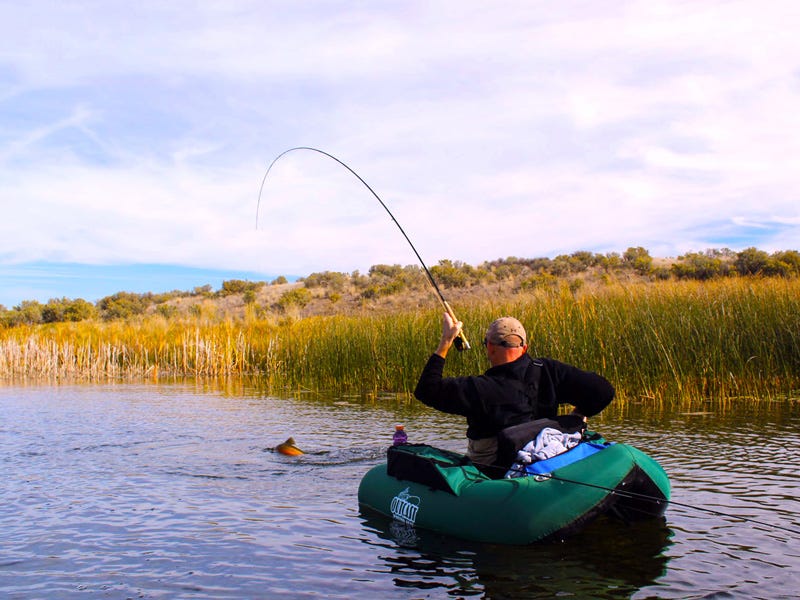
If the spring runoff is giving you an itch you need to scratch, than why not fish a lake. This time of year is a great time to put in some hours and work on your stillwater game. There are a lot of people who are intimidated, or at least a bit overwhelmed, at learning how to fish a big, flat, non-moving body of water. Don’t worry... it’s not too tough once you get the basics and narrow things down a bit. Here’s a quick and dirty tip list that will get you started with the basics of stillwater fishing. Focus on areas closer to the shore All of that water in the middle of the lake- don’t worry about it. It’s likely just too deep to efficiently fish it if you don’t have a lake map. If you're looking for a lake map... or if you want to get real technical we've got some gear you could add to your fishing rig here--fish finders... ...
Read more about 5 Steps to Stillwater Success5 Min -
Posted: May 10, 2013
Matt Gutzmann of North 40 Fly Shop in Great Falls had a fly stick in his arm while he was fishing during his lunch break. This afforded us the perfect opportunity to try out the fishing line technique to remove the buried hook.
Read more about Trying the fishing line hook removal method5 Min -
Posted: May 08, 2013
I've been spending a lot of time on the lower portion of the Missouri lately. If you aren't too familiar with the Might Mo, she's pretty well known as a blue ribbon fishery, but only a very small portion is known as the crown jewel. The rest of the Mo is pretty slow moving and susceptible to agricultural use. I don't know what the native fisheries were like prior to all the dams, but what I do know is that things change drastically after the last dam before Fort Peck. The terrain goes from a pristine mountain cool above Cascade to arid grasslands below Great Falls. Much to my surprise, the steep valleys of what is the beginning of the Missouri Breaks, is a tough place to grow up' filled with prickly pear, thorny bushes, sharp rocks, deer, rabbits and snakes, lots of snakes. The land below Rainbow Dam is so rugged, not much of it has ever ...
Read more about One Man's Trash, is Another Man's Treasure5 Min -
Posted: April 11, 2013
Spring runoff is a time of year that most dedicated fly fishers despise. The water is muddy, full of debris, and overflowing the banks. The weather is cold and the wading is sketchy at best... But don't let the runoff get you down... here are a few tips to help you find success during runoff.... 5. Figure out the time of day that your stretch of water has the best visibility. Often times in the spring the cold nights are enough to slow down the melt and provide a 5 to 6 hour period of time where the water clarity improves. You will see this more readily the closer to the snowpack you are fishing. As you move further down drainage this becomes less apparent but windows of slightly clearer water can be found. 4. Fish the softest water you can find. This means right along the bank and the inside of large eddies. Fish will move out of their n...
Read more about 5 Tips for Fishing Spring Runoff5 Min -
Posted: February 15, 2013
Back in 2007 Paul, Erik, Broady, Ben and a few of the guys trying to pull off this "fly shop in a farm store" thing (find out how it all got started here) were contributing to the newsletter which we created with very few connections to the fly fishing industry. Names like Gary LaFontaine, Rene Harrop, Kelly Galloup- just to name a very few were about the same to us as MJ, Shaq, Jerry Rice, and Kirby Puckett. For Paul- that guy was Scott Sanchez. So you can imagine how excited Paul was last week, when during a tour and line showing at the new and beautiful Simms facility in 4-corners near Bozeman, MT, he met Mr. Scott Sanchez. Scott works for Jack Dennis Fly Shop near Jackson Hole as the fly shop manager for Jack Dennis Outdoors and was touring the new facility as well. After Paul could soak up all he could from our new friends at Jack ...
Read more about Ode to the Double Bunny5 Min -
 Posted: January 07, 2013
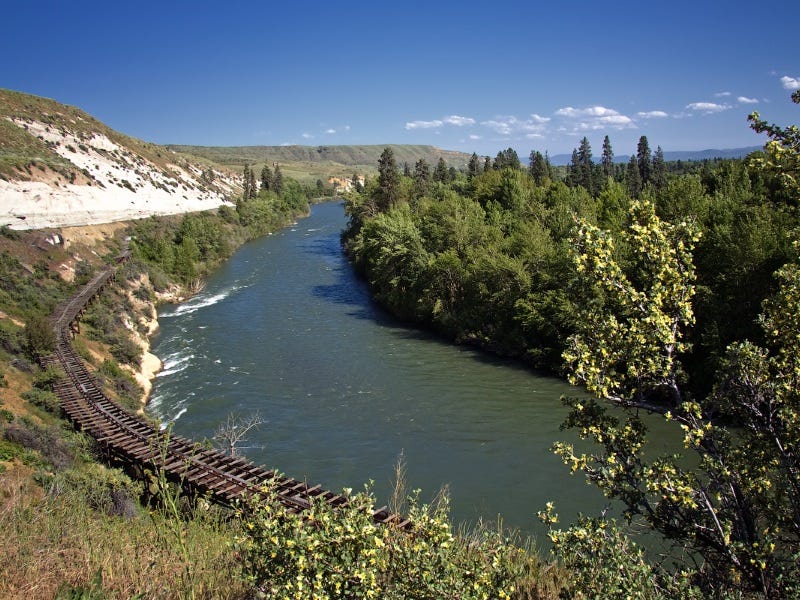
When was the first time you fished the Yakima River? I first fished the Yakima River when I was a student at WSU, back in 1992. I didn't start fly-fishing until a few years later, when I moved to Colorado. Back then it was on spinning-gear and lures. What species of native fish are present in the Yakima Drainage? The fish you're most likely to encounter while fly-fishing the Yakima are its westslope cutthroat and rainbow trout. There are 40+ species of fish in the Yakima, including salmon and steelhead, supported by tribal hatcheries. There's also whitefish, pike minnow, and brook trout. Some reports of brown trout from the Cooper River have swirled around lately, but I've yet to see one in person. What challenges do these fish currently face? As with most fisheries in the NW, these fish face the ''Three H": habitat, hatcheries, and hear...
Read more about Interview with Derek Young: Northwest Fisheries and the Yakima River5 Min -
Posted: December 01, 2012
Build a closed cell foam seat. Using closed cell foam to build a raised seat on your tube goes a long way to staying warm. I shaped mine to fit my tube then used 1 inch webbing to strap it into place. It keeps you sitting high and out of the water, and the closed cell foam insulates great. It also is more comfortable. Wear bulky layers. You want to trap as much air between your legs and the water as possible. I wear a Patagonia Capelene 3 base layer, synthetic pants, and then 2 pairs of larger high pile fleece pants over the puff pants. Doing this allows me to trap a lot of air inside the wader. The downside is looking like the marshmallow man when gearing up. Bring a hot drink. Nothing like hot coffee to warm you warm when a cold snowstorm starts to bite through the layers. We have new insulated North 40 Outfitters’ Klean Kanteens, or...
Read more about 5 Tips for Cold Floats5 Min -
Posted: November 26, 2012
Flashabou Intruder (dressed heavy for fast water) Recipe : Size 2 Streamer Hook or 55mm Shank Black Artic Fox Barred Ostrich Purple Haze Flashabou Marabou Black Rubber Legs Saddle Hackle Lead Eyes UV Black/Purple Ice Dub 30lb Fireline
Read more about Flashabou Intruder Step By Step.5 Min