
Page 60 - North 40 Outfitters
-
 Posted: May 04, 2018
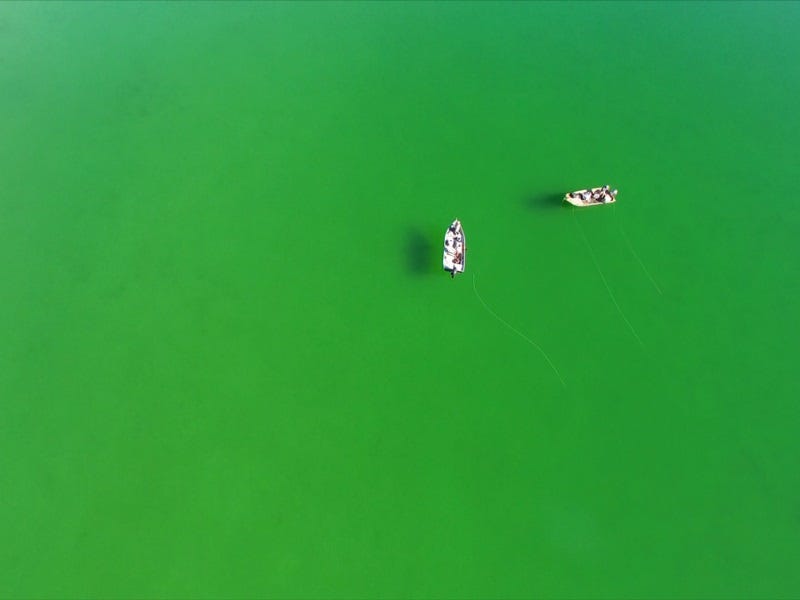
By Brian Chan Fishing a large marl shoal, ideal scud habitat. Determining where trout live in lakes and, in particular, where they feed is critical to fly-fishing success. It is definitely worth the time to learn some basic facts about lake morphometry, biology and water chemistry. This knowledge relates directly to understanding the life-cycles of important aquatic food sources, including significant insect emergences. So let’s take a more detailed look at the stillwater trout environment, where these fish live, their preferred feeding habitats, and the impacts of changing water chemistry. Structure of Lakes Big OK or Island Lake, located southwest of the city of Kamloops, British Columbia, is a near perfectly designed trout lake. A large table-top shaped shallow water area covers much of the middle portion of the lake, while a deep-w...
Read more about Locating Trout in Lakes5 Min -
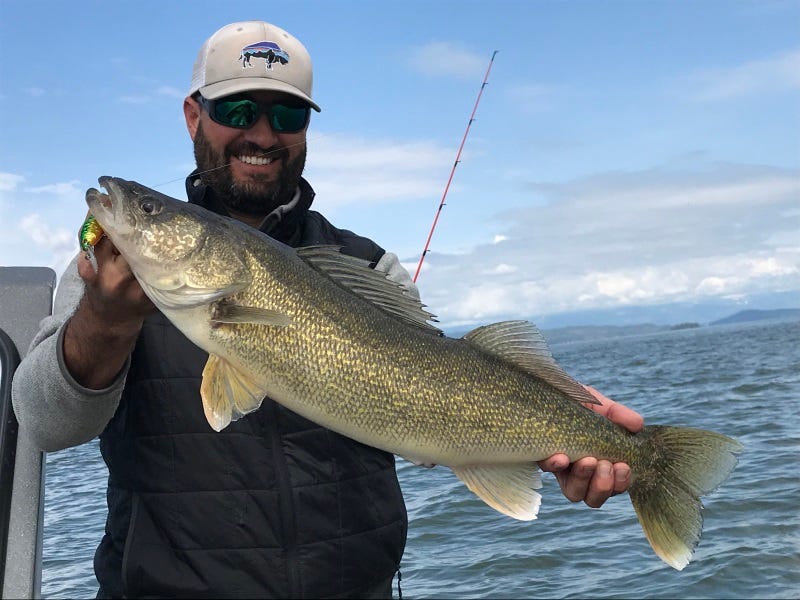
Emerging walleye fisheries, such as Idaho’s Lake Pend Orielle, often kick out big fish in good numbers. That’s the case right now where anglers like Calvin Fuller (shown here) are nailing walleye up to 16 pounds. This nice fish was taken a week ago on a Flickershad. If you’re looking for some of the biggest and baddest walleye in the Pacific Northwest, you should hitch the boat to the back of a rig and head for north Idaho’s Lake Pend Oreille. Lake Pend Oreille is the West’s new walleye hotspot and people in the walleye circles are racing to get there. That’s because the fish aren’t picky and they grow fast due to an abundant food base—meaning scads of warm-water fishes and kokanee salmon. Visualize the early years at Canyon Ferry, Fort Peck, Boysen, and Seminole reservoirs and you can understand what type of fishing Lake...
Read more about The Hottest Walleye Fishery in the West - Idaho’s Lake Pend Oreille5 Min -
 Posted: May 04, 2018
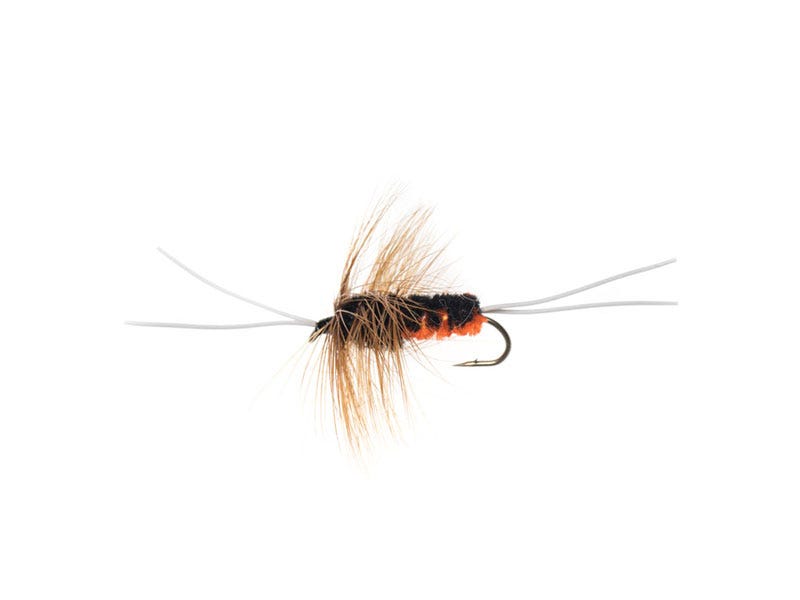
I had a college girlfriend who had a humorous habit of mistakenly calling the Bitch Creek Nymph, the Bear Creek Bitch. Anytime I see a Bitch Creek Nymph in my fly box or tie one on, it reminds me of that gal. And that’s one reason, but not the only reason, why I like this fly and believe it deserves a place in every western angler’s fly box. Nobody is quite sure where the Bitch Creek originated. Some say in southwest Montana where it was used on the big stonefly rivers, such as the Madison, Big Hole and Yellowstone. Others say it was tied and first fished in eastern Idaho on the Henry’s Fork and South Fork Snake rivers. No matter where it originated, nobody argues the merit of this fly, especially when fishing it early in the season during the salmonfly hatch. Salmonflies, which are large two-inch long stoneflies, generally emerge ...
Read more about Fly of the Week: Bitch Creek Nymph5 Min -
 Posted: May 03, 2018
Chopaka Lake The top fly-fishing only lake in the state is open for business. Mercifully (considering the winter we’ve had), the road into Chopaka is in the best shape it's been in a long time. The next few weeks at the state’s fly-fishing Mecca should see increasing catch rates on quality rainbow for anglers making the trip. Of course, as I write this, prime camp spots are most assuredly taken. The compound will continue growing into a fly-fest of immense proportions, and by June’s Callibaetis hatches, we’ll be in full swing. Keep in mind that DNR limits your stay to 14 days. I know, I want to live there, too. If you’re arriving a bit later in the spring, keep in mind that a few other beautiful DNR campground options exist up Toat’s Coulee and west of Chopaka Mountain at Cold Springs. Chironomids, like Chan’s Bombers in #1...
Read more about Eastern Washington Fishing Report 05.03.185 Min -
 Posted: May 03, 2018
Missouri River Spring is fully here and runoff is underway all across the state. Our local tributaries are pumping mud, though they should settle out a bit soon. The river is really crowded too, because it is one of the only floatable rivers right now. The reports have not been awesome, but fish are being caught and of course it is better than fishing in a snowstorm right? Dry Flies BWO’s are popping and a smatter of March browns have been seen on the lower river. High water conditions don’t always make for prime dry-fly opportunity, but there will always be a few fish working the bank edges and soft-water pockets. Streamers If in doubt, fish a streamer. High water pushes fish tight to banks and cover. These areas are hard to reach with nymphs. A well placed streamer can get the job done and it is fun to cast them as close as you can...
Read more about Great Falls, Montana Fishing Report 05.03.185 Min -
 Posted: May 03, 2018
Coeur d'Alene River Flowing 8,890 cfs at Cataldo. The river has come down a bunch in the last week, but is still high. Not sure it will fish by the weekend or not—it is suppose to start climbing again soon with the warm weather to come. Maybe a day on the local lakes would be a better bet. St. Joe River Flowing 8,100 cfs at Calder. Same deal here—the river dropped a bunch and is going to go right back up this week with the heat. Just a teaser here folks—the lakes is where it's at. Clark Fork River (MT) Flowing 35,600 cfs and climbing. If you like fishing for pine trees, discarded cooler lids, and perhaps a wayward cow, this is a great option right now. It's going to be a while until the Clark Fork is back in action. Local lakes The crappie and bluegill fishing has been pretty darn good as of late. The cold front we saw the last few...
Read more about Coeur d’Alene, Idaho Fishing Report 05.03.185 Min -
 Posted: May 03, 2018
Lochsa River The Lochsa River currently sits at 9,430 cubic feet per second as of May 1. We drove up to Kooskia, Idaho last evening and the Middle Fork of the Clearwater did not look too off colored. With the predicted weather forecast for Lolo, Montana bringing some heat the next three days, more snowmelt is a possibility by the weekend. One employee fished the river when it was around 7,000 CFS and had good fishing, with water clarity exceptional. He said he saw March browns coming off, with fish eating them. If we were to go fish, our repertoire would consist of a six or seven-weight to throw streamers, like the Game Changer, Meat Whistle and various Galloup's Dungeons. We’d also cast a four or five-weight with some March brown patterns, Parachute Adams’, Skawala, or a Purple Haze. Be careful while you are wading and watch out for...
Read more about Lewiston, Idaho Fishing Report 05.03.185 Min -
 Posted: May 03, 2018
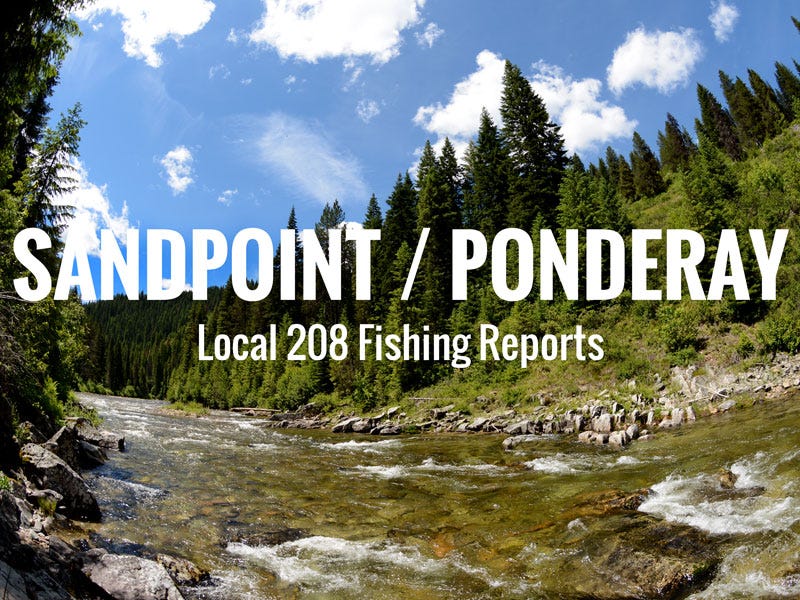
Clark Fork River (ID) Flows are currently 74,500 cubic feet per second, and water clarity is off-color. This too high for walk/wade fisherman, and is also a serious struggle for boaters. It will be a couple weeks before this river calms down and becomes fishable again. Lake Pend Oreille The lake is steadily rising two feet a week due to spring runoff. Water clarity on the lake is a little stained, but still very fishable. Clarity is worst at river/stream inlets. Surface temperatures have ranged from 40-55°F depending on where you are on the lake. The pike are finishing up the spawn in various sloughs, bays, and flats. From what I have heard, pike have been easy to find, but tough to catch. They are in a “lockjaw” spawn/post-spawn phase, and food isn’t their main focus. However, this isn’t to say you can’t hook into your person...
Read more about Sandpoint/Ponderay Fishing Report 05.03.185 Min -
 Posted: May 03, 2018
If you are a fly-fisher and have not heard the terms trout spey, you’re probably living under a rock with the Pteronarcys. That’s because spey casting techniques with single-hand and double-hand rods are all the rage right now. Manufacturers have flooded the market with new rods and lines in recent years, to cover almost every niche anglers can imagine. However, combining traditional trout fly-fishing with spey-casting tackle and techniques is both awesome and confusing. It takes a solid introduction to learn of the benefits and fun of participating in spey. And that’s why some people choose to neglect spey, fearing they can’t master the casts required for success. We can solve that issue. In April 2016, North 40 Fly Shop pulled together an impressive cast of fly-fishing legends, industry leading tackle designers, and manufacture...
Read more about Montana Trout Spey Clave 3.0, aka Cinco de Speyo5 Min -
 Posted: May 02, 2018
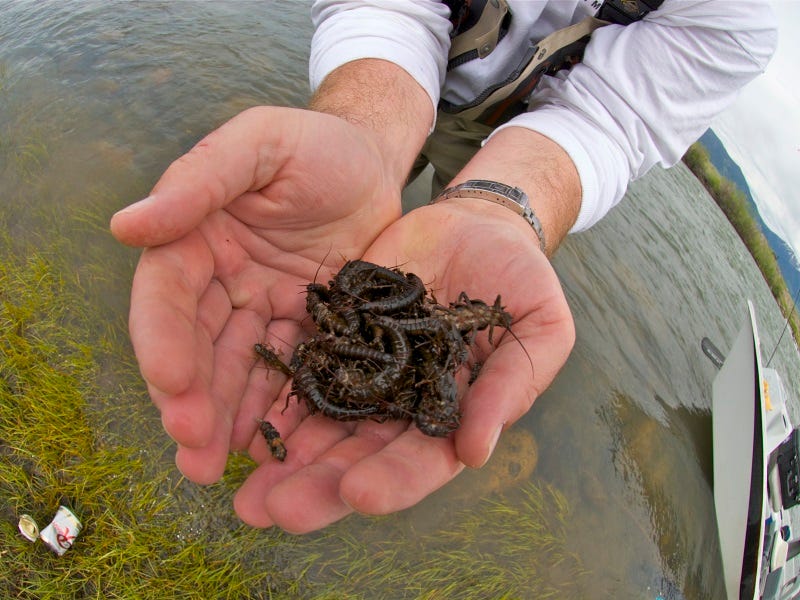
It's finally spring in Montana, which marks the beginning of a special time for anyone who knows anything about anything . . . and especially if you know about fly-fishing in Big Sky Country and other locals around the Rocky Mountains. That’s because this is the time when salmonflies, which are three-inch long aquatic insects, get active and begin emerging on dozens of big-name western trout streams, including Montana’s Bitterroot, Big Hole, Madison, and Yellowstone rivers, among many others. And this isn’t any ordinary hatch—because of their size and abundance, even giant trout throw caution to the wind and rise freely to the surface to inhale a mega-meal. Salmonflies are the most anticipated hatch of the year and when anglers hit the hatch perfect—when the adult insects are flying and the trout are crushing imitations of them...
Read more about Hatch Guide #4: Salmonflies5 Min -
 Posted: May 01, 2018
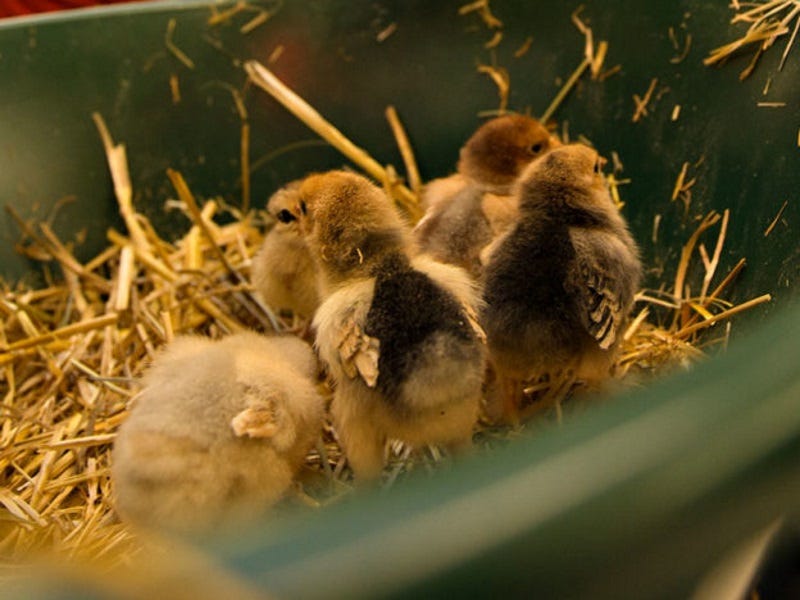
When you get your chicks home, normally you have a brood kit setup like the ones we sell online. This provides optimal area for your new chicks to grow and get ready for life with the your established flock. The brooder kit is self-contained and has what you need to get you started.... just add chicks and chick feed. But what happens if the place your chicks are going doesn't have electricity? When a heat lamp is not an option (like in a power outage in a snow storm, like the one we had during this interview), you will need to understand what is provided by the heat lamp and brooder kit, so you can provide this to your flock without it. New Chicks: When a Heat Lamp is not an Option When a chick comes home, they need a constant heat of between 90-95°F during the first week. This temperature is decreased by 5° every week until your chic...
Read more about How to Keep Baby Chicks Warm Without Electricity5 Min -
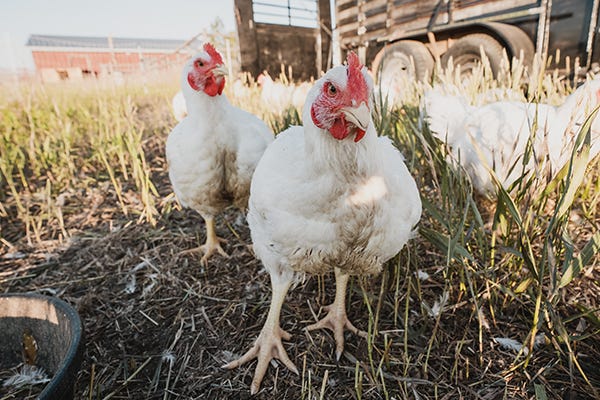 Posted: April 30, 2018Comments: 4Raising Cornish Cross in Chicken Tractors Read more about Raising Cornish Cross in Chicken Tractors5 Min