
Page 89 - North 40 Outfitters

-
 Posted: September 07, 2017
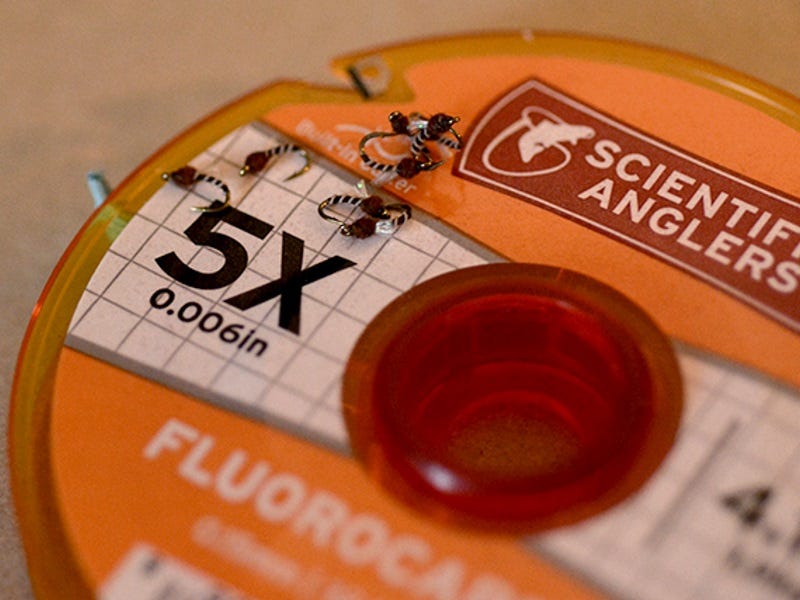
Land on the rise Small flies don’t have a lot of calories. When fish are choosing to eat them, it’s because there are lots of them. When trout are gobbling small flies, they station themselves just below the surface and feed with a steady rhythm. Sometimes, they eat several flies from the surface before slipping deeper between rises. If you can land your fly right on a rising fish with proper timing and accuracy, odds are better he will eat it. How can I see to tie it on? Magnification is helpful and downright essential for many folks. That’s especially true when working close up and trying to tie thin tippets to small flies. A few magnification options: Hat Eyes are flip-down magnifiers that attach to the bill of your hat; Flip N’ Focus are magnification lenses that attach right to your sunglasses; Clics magnetic glasses are als...
Read more about Fly Fishing With Very Small Flies: A How-To5 Min -
 Posted: September 07, 2017
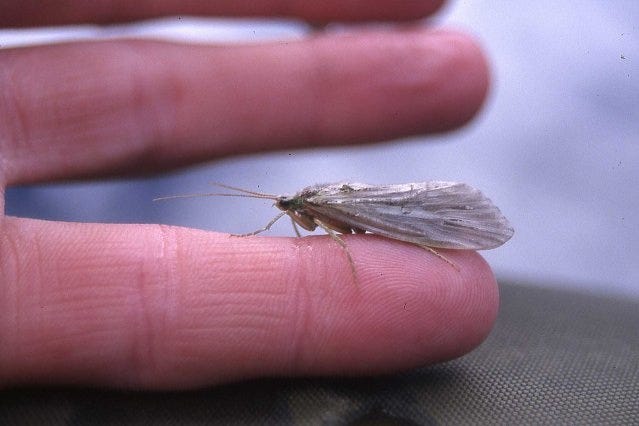
The North Fork of the Coeur d’Alene River has improved a bit as the nights have started to cool. Still, mornings and evenings are your best options. October caddis are showing up now, but Tricos, PMD's and hoppers dominate, especially in the mornings. Midday is slower but, big attractors, such as Chubby Chernobyls, beetles and small ants, do the trick. Nymphs will take fish at that time as well. The big caddis are consistently out in the late afternoon and evening hours, so be prepared to match them. Want to know how to match late season flying ants? The St. Joe River has been great! Early, midday or late . . . time of the day doesn’t matter because it’s all fishing very well. Smaller hoppers with a beetle or an ant dropper fits the bill. You will get fish on smaller attractors too, meaning Stimmies, PMX's and Humpies. Small flyin...
Read more about Coeur d'Alene River Fishing Report 9.7.20175 Min -
 Posted: September 06, 2017
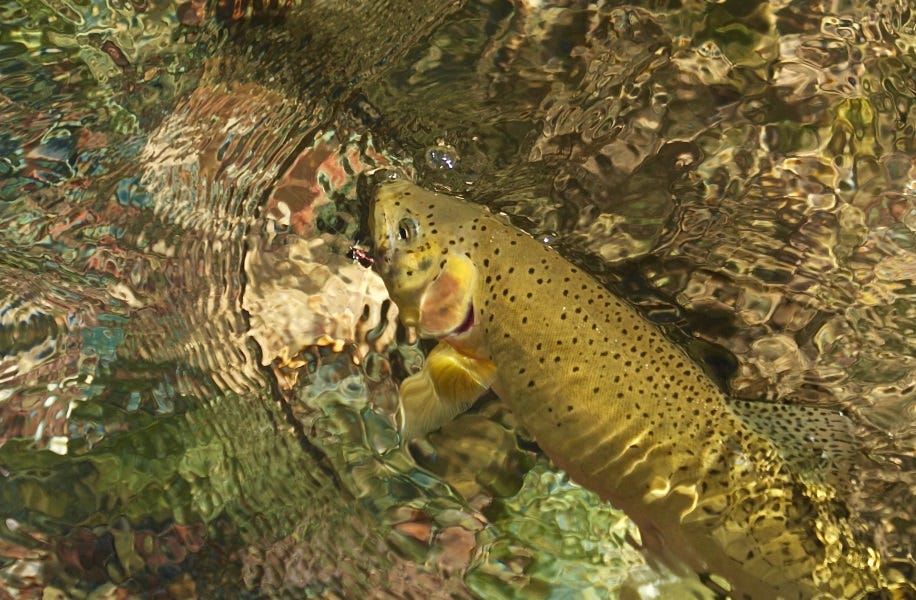
By Tyler Balich My first introduction with tiny little ants was about 15 years ago, with a guy named Larry Winey. Larry was a super quiet guy from Pennsylvania. He was in his late 50’s or early 60’s at that time and made annual pilgrimages to north Idaho, usually in late summer, about the first of September. He was one of the most soft-spoken and humble humans I’ve come across. And he could have been different—this guy could fish. Surprisingly, I found out that he had one fly box dedicated to one fly—the ant. To be honest, I’m not sure of the scientific name of this insect, but it’s common in the northern Rockies during late summer and worth having in your fly boxes through September. I just call it, “Larry’s Ant.” These are flying ants, and even a size 18 might get rejected, so I usually tie mine in size 20 and 22. L...
Read more about How To Match Late Season Flying Ants5 Min -
 Posted: September 01, 2017
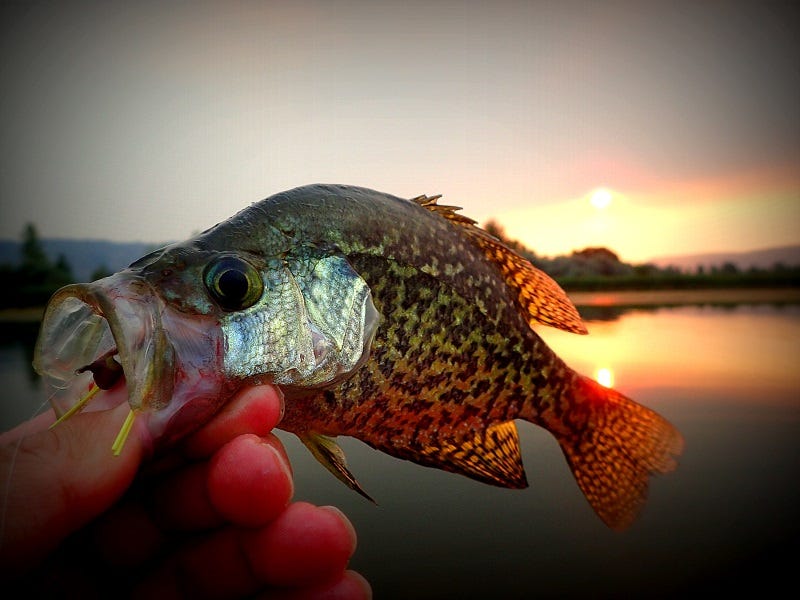
By Tyler Hicks Summer just can't seem to release its grip on north-central Washington’s Okanogan country. We've had some tantalizing tastes of fall, but each time the heat comes back with a vengeance. With highs climbing into the upper 90's for the foreseeable future, options for trout fishing are limited. So, with a little free time, I decided to try something I had not done in a long time—fly fishing for panfish. After getting off work I dropped my kayak into Washburn Island Pond, a weedy and warm backwater impoundment off the Columbia River. I brought along my 3-weight glass rod setup, and a small box of metallic, brightly colored nymphs, as well as an assortment of micro-poppers. Those flies and more panfish food are online here. It was a balmy 96 degrees when I launched, but as the sun dipped behind a dense layer of smoke the ...
Read more about Fly Fishing Tip: How to Catch Panfish in Summer5 Min -
Categories: FishingPosted: September 01, 2017
By Tyler Hicks Summer just can't seem to release its grip on north-central Washington’s Okanogan country. We've had some tantalizing tastes of fall, but each time the heat comes back with a vengeance. With highs climbing into the upper 90's for the foreseeable future, options for trout fishing are limited. So, with a little free time, I decided to try something I had not done in a long time—fly fishing for panfish. After getting off work I dropped my kayak into Washburn Island Pond, a weedy and warm backwater impoundment off the Columbia River. I brought along my 3-weight glass rod setup, and a small box of metallic, brightly colored nymphs, as well as an assortment of micro-poppers. Those flies and more panfish food are online here. It was a balmy 96 degrees when I launched, but as the sun dipped behind a dense layer of smoke the ...
Read more about Late Summer Panfish Tactics5 Min -
 Posted: August 31, 2017
Concerts and big largemouths in one fell swoop? Sign me up . . . no matter how dazed I might be. By Steph Avena So you’re headed to the Gorge at George and achin’ to fish, but don’t wanna’ miss a moment of a summer concert? Then, I’d recommend you hit Stan Coffin Lake for some catch-and-release action on largemouth bass. As a crow flies, this ancient lake is so close to the concert venue that the fish can practically hum along with the band. However, don’t plan on getting there in five minutes, as long as the ‘south gate’ to Quincy Lakes, which is located in the Columbia Basin Wildlife Area, remains closed due to vandalism. Never fear, I clocked the northern route, through the north entrance, last weekend and it was only 15 minutes from the concert campground entrance. The best craft to ply these waters for lunker largem...
Read more about Double Dippin’ At Stan Coffin Lake5 Min -
 Posted: August 30, 2017
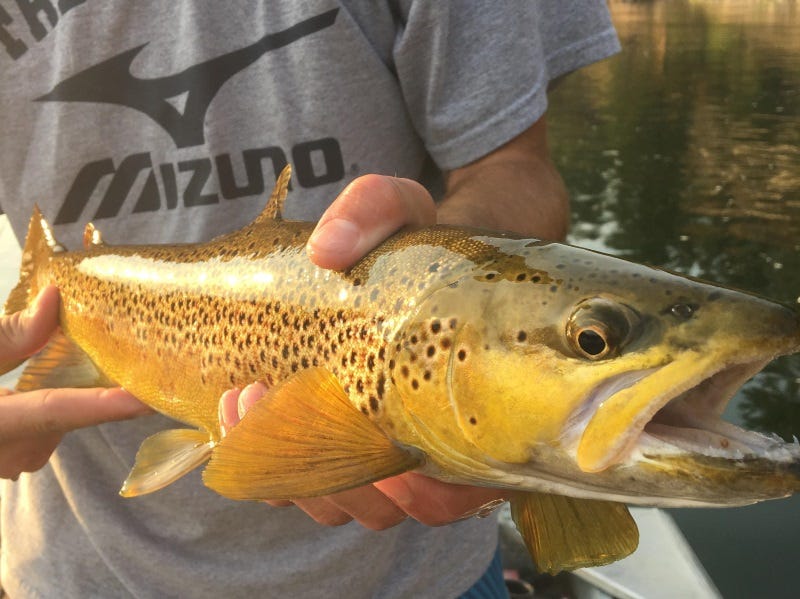
With only a few hours to spare before dark, I decided to run the boat over to the Clark Fork River for a little cast and strip. Flows were 30,000 cfs, and water clarity was excellent. There was a little bit of debris floating down the river due to the sudden increase in flows. Nothing too large, just intermittent branches. There wasn't a hatch until 7p.m. Once 7 rolled around, caddis took to the water and the trout slowly began to rise. However, my mind was set on pounding Woolly Buggers and other small streamers into the banks to see what I could pull up. Needless to say, the Clark Fork did not disappoint. I finished the day with one brown trout, one cutthroat, one rainbow, one smallmouth, and one pikeminnow. Check out our streamer patterns online here. Now that I am typing this, I realize I hit a Clark Fork grand slam. The brown trout...
Read more about Clark Fork River Fishing Report 8.30.175 Min -
 Posted: August 30, 2017
I can’t believe August is over, but I’m not sad to be looking into September. Right now, it is still hot and smoky out there. One of these days, we will wake up to a cold front, with some rain, and the air will clear. Like most Montanans, I’m looking forward to that day. The zone from the dam to Wolf Creek Bridge is arguably the best bet right now if you're looking for a weed-free drift. Mornings continue to provide the best fishing action of the day. Yesterday we were on the water early enough to beat the rush and right off the bat, the fish were eating steadily. They were split between a #16 Tan UV Czech and my favorite #20 Tufted Zebra. You can take your pick of our nymphs by clicking here. It was not long before more boats launched, and after the fish got floated and rowed over a few times, they got wary and fussy. Just like me...
Read more about Great Falls Fishing Report 8.31.20175 Min -
 Posted: August 30, 2017
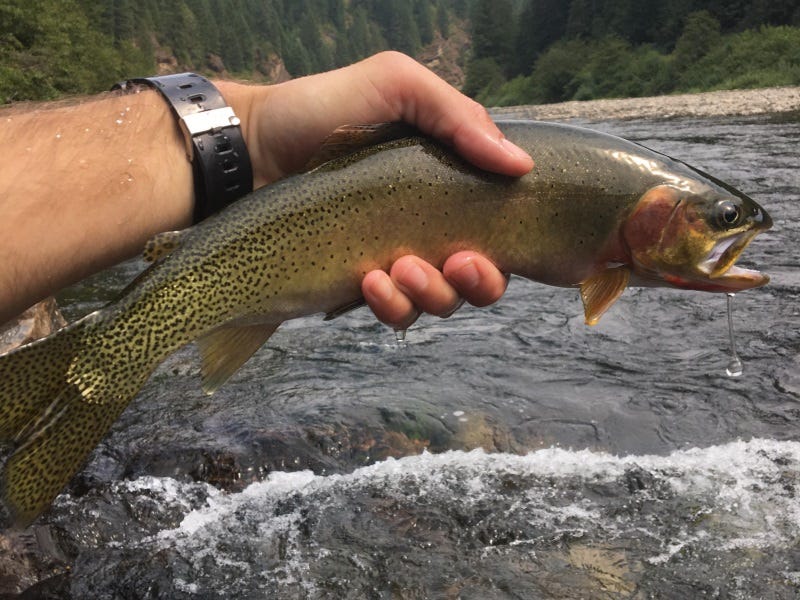
Talk about a beautiful summer day to be on the Joe. Temperatures were in the 80s, water temp was cool, clarity was excellent, not a cloud in the sky, and a soft breeze to keep me cool. Flows were just above 400 cfs, so the lower Joe was basically a long lake. However, there is plenty of fishable pocket water above Avery, and a few miles below. To say the St. Joe is fishing well is a major understatement. In the 5 hours I spent on the river (including driving from run to run), I must have landed around 40 cutthroat. Every hole that looked like it should have a couple trout in it, did. The size of trout ranged from 8-16 inches with most of them being 12-14 inches. The fish were willing to eat any color I threw at them.... as long as the color was purple. All day I fished a #8 Purple PMX parachute followed by a #14 Purple Rocky Mountain Min...
Read more about St. Joe River Fishing Report 8.29.175 Min -
 Posted: August 30, 2017
Lake Cocolalla has been tough, but very rewarding. I spent a few hours fishing the lake yesterday morning from 7-10 AM with hopes of finding a few big trout. Loaded with fast sinking and intermediate line, no trout was out of range. The trout appeared to be very scattered and not under much pressure to eat initially. The little inconsistent surface activity further proved that the trout were feeding casually, wherever and whenever they please. However, the fish I did find were actively eating subsurface. That they are hungry is both good and bad. Good, in that the trout were feeding, bad that they were spread throughout the entire lake. This made finding a decent concentration of trout difficult. I was able to find one beautifully chunky 3 1/2 lb brown trout in 10 feet of water. I also found a school of slab Crappie suspended in 28 feet o...
Read more about Lake Cocolalla Fishing Report 8.29.175 Min -
 Posted: August 30, 2017
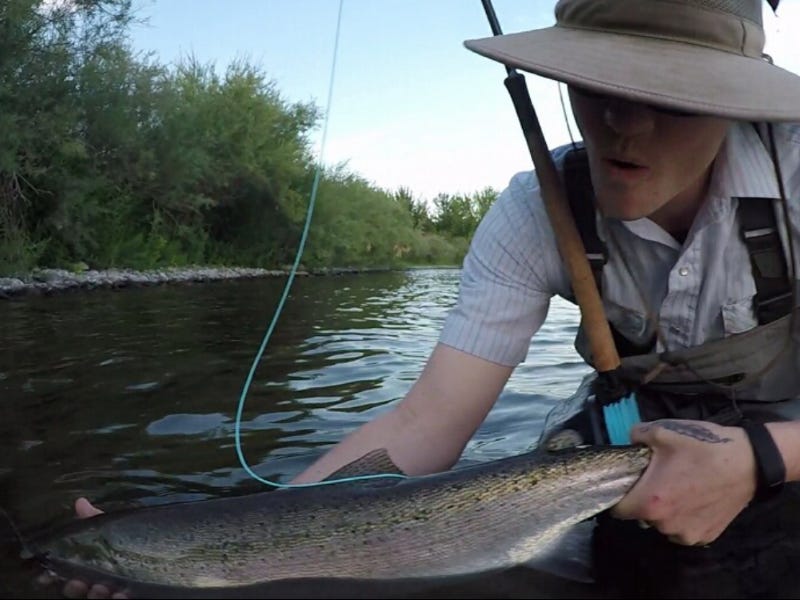
By Dylan McGregor Idaho steelhead are in peril. Over the past 10 years an average of 151,687 steelhead have passed Lower Granite Dam (about 30 miles downstream from Lewiston) and headed upstream and into Idaho, Washington and Oregon waters; last year just 87,000 passed Lower Granite; this year biologists expect 60,000 or fewer steelhead to get past the dam, with only a handful of those being the coveted wild fish. These are the current rules and regulations for steelhead fishing this year. This makes me think: If our wild fish are in danger of going extinct, should I even wade into the water to catch one? If I do, how will that impact these fish? I know most people think Idahoans are all about potatoes. What they may not realize is that some families have steelhead traditions and a connection to the waters they swim in that are just as d...
Read more about Idaho’s Steelhead Conundrum5 Min -
 Posted: August 29, 2017
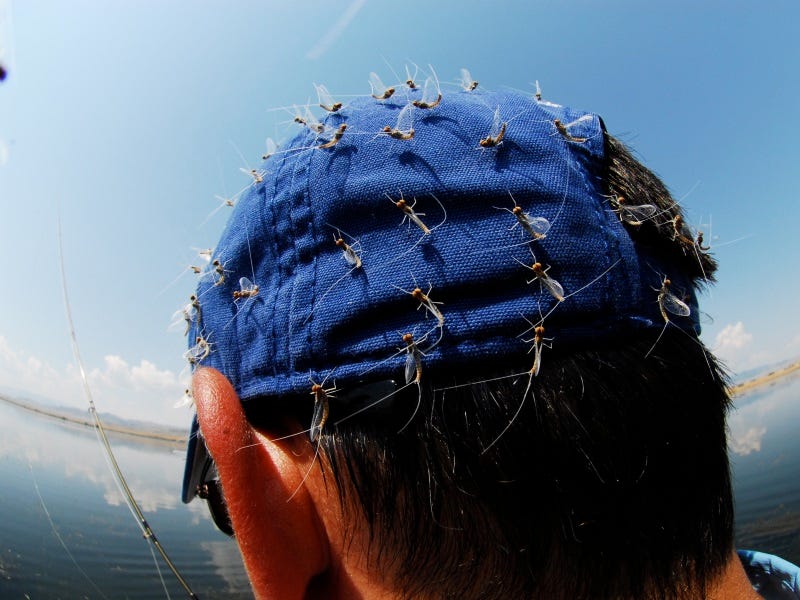
The season is winding down, but you may get one more round of “gulpers.” By Greg Thomas As summer winds down you may still find a few Callibaetis mayflies on the water, whether fishing lakes and reservoirs that are famous for that bug—Chopaka Lake, Hebgen Reservoir, Ennis Lake, Quake Lake—or some other obscure water. So, you need to be prepared for this hatch whether it actually comes off or not. Play your cards wrong and you might be rowing through a wad of risers with nothing to offer. This hatch begins as early as July on many waters and extends into September on most. Action can begin early in the day when Callibaetis nymphs rise through the water column and try to take flight. While sitting on the surface, waiting for their wings to dry, many are taken under by the subtle rises from trout. Even big fish may leave a tiny dimp...
Read more about Matching Callibaetis5 Min