
Page 39 - Blog
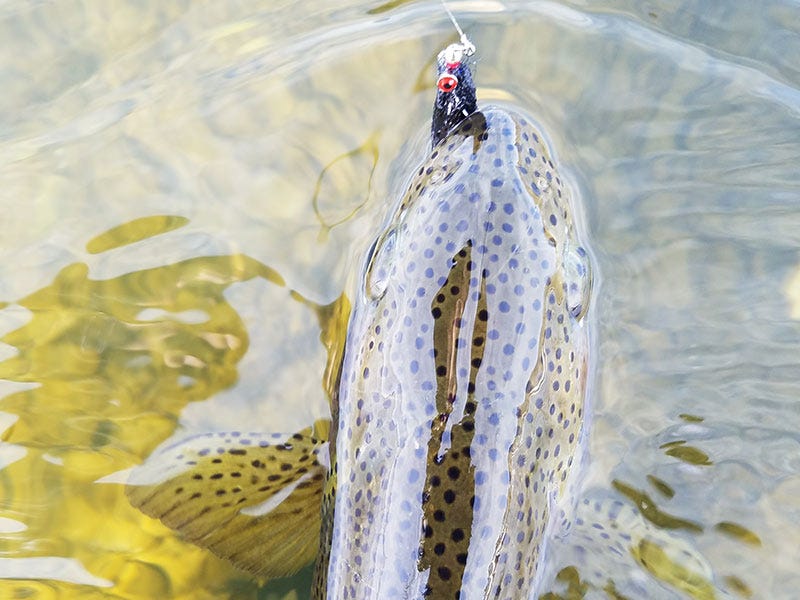
Early one season, I was guiding on the Middle Kenai River in Alaska. I came across this guy on the bank with a long rod. He was sending casts 100 feet out into the river. He was reaching water that I was working from the boat. And, he was catching fish. The same fish I was reaching by boat. I did not immediately go out and get a spey rod, but I thought about it. Then I met these guys in Montana who worked at a fly shop in Great Falls. They were all excited about spey for steelhead and they were playing around with their spey rods on the Missouri River. I decided I needed to get in the game, so I called up George Cook. He was the Sage Rep who I kept running into on the Kenai. He set me up with the Death Star. That’s code for the Sage 7126-4 TCX, and George turned that fly rod into a legend. It took me a few out...
Read more about It's Trout Spey Time AgainNorth 40 Life
-
 Posted: March 18, 2019
We’ll just state the obvious. Fishing for walleye is just plain fun. Thrilling and fast-paced, catching walleye means an angler has to be quick-thinking when it comes to fishing this predator. That’s why we asked walleye expert, Dale Gilbert, to share his extensive walleye knowledge with us. A walleye master, Dale, has fished walleye from Arkansas to Canada and Michigan to Montana, and he doesn’t disappoint. Jigging for walleye begins with the right gear. In this link, walleye expert, Dale Gilbert, explains the rods and jigs he uses and how to tie palomar knots to catch walleye. Video Transcription How to Jig for Walleye Hey folks. This is Dale Gilbert. We're going to talk a little bit about getting set up to do a little jigging for Walleyes, and we’re over here at Noxon Reservoir today....
Read more about How to Jig for Walleye?5 Min -
 Posted: March 14, 2019
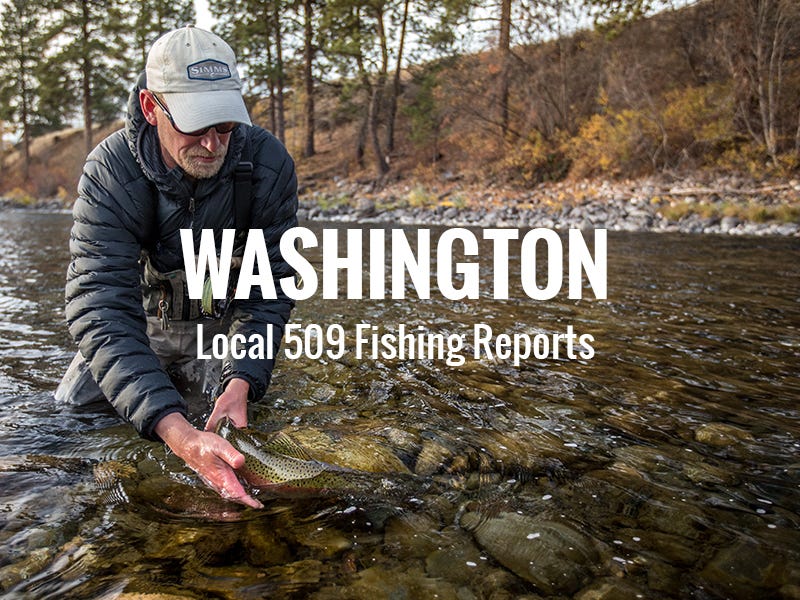
Omak Lake (WA) Next week is when spring is supposed to officially start. According to the weather forecast, day time temperatures are projected to be in the mid-50s. All I can say about that is, let's hope so! Until then, I can report that right now fishing is okay. In talking to the anglers that have been out there, they are catching a few fish here and there. Nicholson (Beer Can) Beach and Cowpie Beach are producing some nice fish averaging about 18 inches with a few over 22 to 24 inches. As night temperatures, as well as the day time temperatures, climb, the fishing should improve greatly. Right now, you will find most of the fish cruising right at the drop offs. The depth you will find them in is anywhere from 10 to 15 feet. That said, don’t be surprised if you get follows into the shallower waters. Most of the fish are not bei...
Read more about Eastern Washington Fishing Report 03.14.195 Min -
 Posted: March 14, 2019
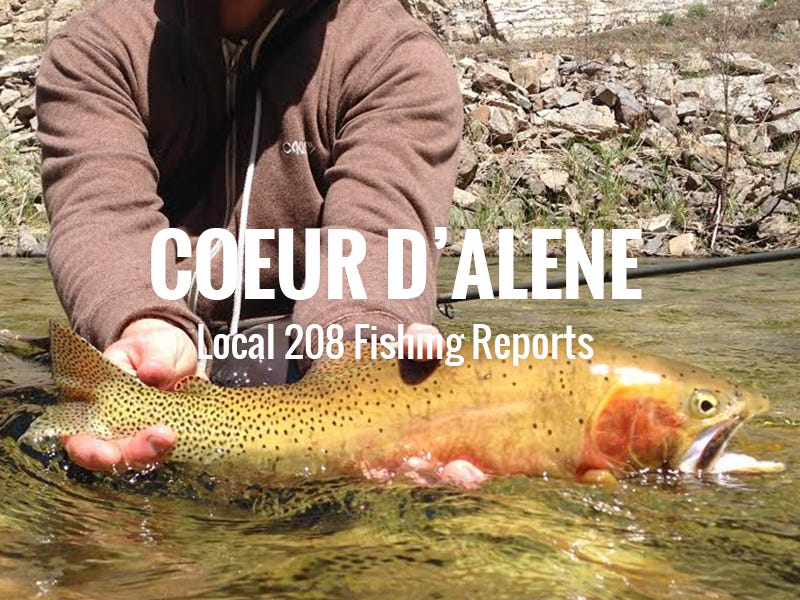
Coeur d'Alene River The flow is 493 cfs at Cataldo. That's not much water folks but get ready. Next week the forecast says mid-50s. This will bring the water up in a hurry. Hopefully, it will not be too fast or bring too much rain on top of it. There is a ton of snow to come down the creek this year. So, keep a close eye on our reports and we’ll keep you abreast of the current conditions. It is going to be a rollercoaster of a spring with this much snow. If you are to go up this week or the first part of next week, it is going to be a nymphing game and/ or streamer game, mostly. Now with the warmer temperatures, they are calling for, we might see some midges, blue wing olives, and, possibly, some namoura stoneflies. I think the ol' stand by rig with a Pat’s rubber legs for a lead fly and a smaller pheasant tail d...
Read more about Coeur d'Alene Fishing Report 03.14.195 Min -
 Posted: March 14, 2019
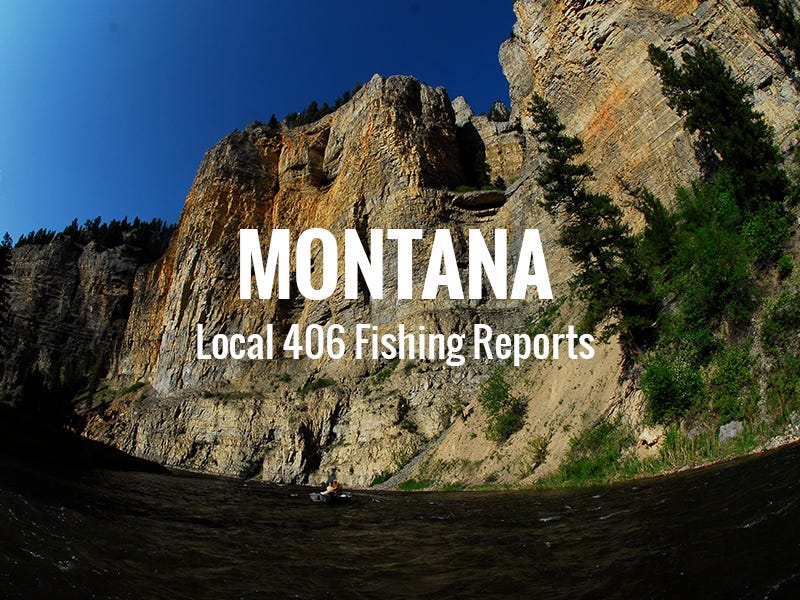
It was intolerably cold and snowy from January 26th until the first week of March. You should take a drive along the river from Pelican Point to the Mountain Palace just to see the ice formations right now. When she starts moving, it’s going to be something. Now, it’s finally warm enough to consider fishing, but be warned. If you are headed up above Craig to fish, parking and walking access is very limited. If you can find a safe place to park and are able to make your way to the river, you’ll also have to deal with shelf ice. Not only can you fall through the edges, but drifting sheets have taken down wading anglers, costing them their pride and even their lives. So, stay safe out there! Swing Season Is Back The Missouri River is an awesome canvas on which to apply a swung fly. March is an excellent time to employ the swing ...
Read more about Great Falls, Montana Fishing Report 03.14.195 Min -
 Posted: March 11, 2019
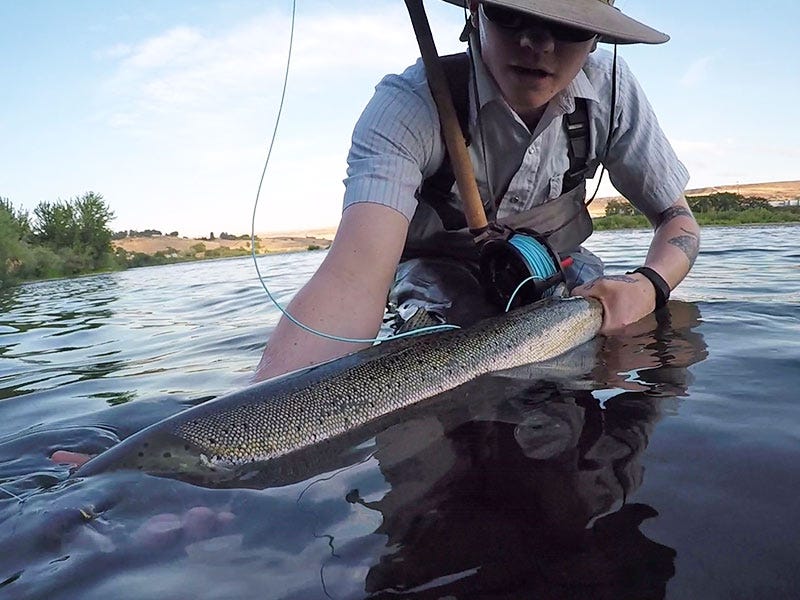
We’ll just state the obvious. Fishing for walleye is just plain fun. Thrilling and fast-paced, catching walleye means an angler has to be quick-thinking when it comes to fishing this predator. That’s why we asked walleye expert, Dale Gilbert, to share his extensive walleye knowledge with us. A walleye master, Dale, has fished walleye from Arkansas to Canada and Michigan to Montana, and he doesn’t disappoint. Walleye don’t like a lot of current. So, where to find walleye, depends. Walleye migrate and move a lot. In this link, walleye expert, Dale Gilbert, explains how to look for the bubbles and how to find walleye in the seam. Video Transcription Where to Find Walleye Walleyes migrate. They move a lot, so it kind of depends. And what we're dealing with here right now is that we're basically fish...
Read more about Where to Find Walleye?5 Min -
 Posted: March 08, 2019
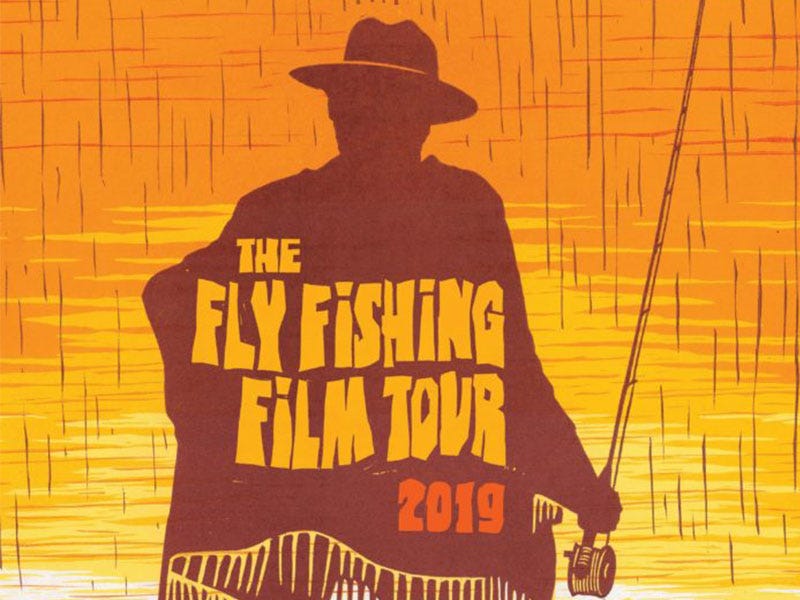
The most common type of fly rod you see on the water nowadays is a modern spey rod. If you were to drive up the Clearwater River when the steelhead are here, I would almost be willing to bet you would not see one angler fishing a single-handed rod. Most people wouldn’t bat an eye at this, but traditionally the rod that was used was a single-handed rod. So, why have people strayed away from them and towards two-handed rods? Casting a Spey Rod is Efficient Efficiency. That is the number one reason that comes to my mind. Once you have learned the basics of casting a spey rod, the cast becomes effortless. At the drop of a dime, you can cast anywhere from fifty feet to a hundred and forty feet (depending on your skill). The thought of that drives a lot of people towards a spey rod. There is also an added benefit of less fatigue -espe...
Read more about Is Spey the Way?5 Min -
 Posted: March 05, 2019
It’s time to shake the winter blues and get back into the fish-fighting spirit. This year’s film tour covers some awesome stories from friends road tripping cross-continent, salty dudes in the South Pacific, trading snowboards for spey rods, Idaho’s cutthroat mecca, conservation in Yellowstone, Hank Patterson’s laugh in South Dakota’s Black Hills, and adventure in French Polynesia. There’s something for everyone in this odyssey of sip rises, streamer chases, and screaming runs on the flats. For those of you that are not familiar with the Fly Fishing Film Tour, or F3T, this is the 13th screening year, and in my opinion, it gets better just about every year! All the films are proudly presented by Costa, Simms, and Yeti, respectively. The real focus though, are the organizations around the country and globe that benefit from the...
Read more about F3T Fly Fishing Film Tour 2019 – Sandpoint, ID5 Min -
 Categories: FishingPosted: February 27, 2019
Starting March 1st walleye anglers on Lake Pend Oreille, the Clark Fork River, and the Pend Oreille River can earn up to $1,000 per walleye when turned into an Idaho Department of Fish and Game, IDFG, fish-head freezer location. Walleye Lottery IDFG has tagged 50 walleye throughout the system and when these walleye are received by IDFG, a $1,000 check could be on its way to you! Simply cut the head of the walleye off, put it in the fish-head freezer with your contact information, and you could win. What's innovative for catching walleye? Check out our ICAST review. Walleye were illegally introduced into Noxon Reservoir in 1992 and since then have become prolific throughout the Clark Fork River, above Cabinet Gorge Dam. Recently, walleye have taken hold in Lake Pend Oreille, the Pend Oreille River, and the lower Clark Fork River. T...
Read more about New Angler Incentive Program – Lake Pend Oreille5 Min -
 Posted: February 26, 2019
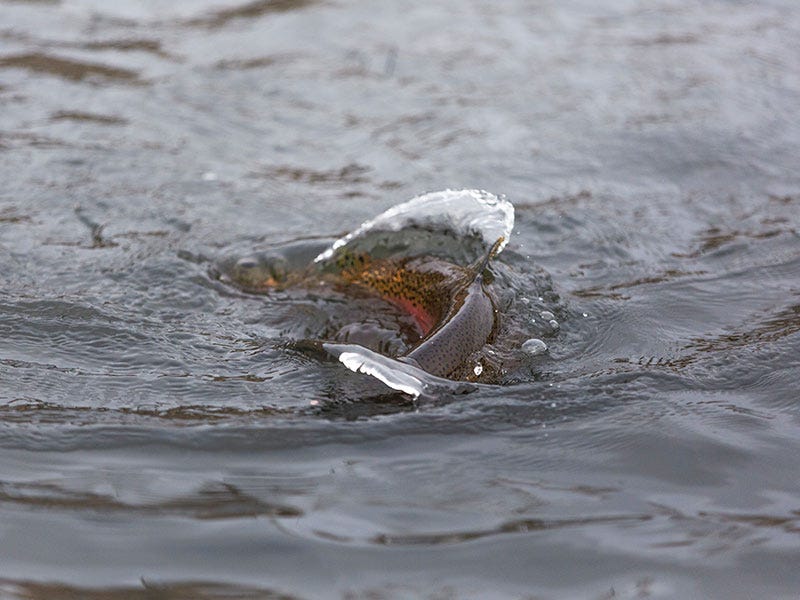
Do not wade over redds. Seems simple enough, right? There are a few key things to look for during the spring and fall spawn. Spring is fast approaching, and the fish are getting frisky. Educate Yourself: How to Spot Redds I fondly remember my time spent on the Great Lakes tributaries, fishing for lake run browns and rainbows. Often, you’d find large rainbows paired up in the spring. At a young age, we knew to never fish for these courting trout, however, we never knew what to look for when the fish weren’t there. It is important to stay vigilant for defining characteristics on the stream bottom. I’ve seen redds in many types of water, anywhere from inches to a few feet of water in varying speeds. However, a bulk of the redds were always in shallow tail-outs, or riffles. Fish that range from 14 inches or smaller look for pea-sized or...
Read more about Don’t Tread on Me5 Min