
The Only Fence You Need? High-Tensile vs Standard Barbed Wire

We compared three types of barbed wire commonly used across ranches in Montana, Idaho, and Washington to see what actually holds up on the fence line.
Out here, fence is not decoration.
It holds livestock. It marks property lines. And it takes the brunt of whatever the Northwest weather decides to throw at it. Wind, snow, drifting ice, and the occasional elk or deer can all put real pressure on a fence line.
That is why the wire you choose matters.
While filming our latest ranch review, we took a closer look at three common fencing options from OK Brand to see what really sets them apart.
14 gauge high-tensile barbed wire
12.5 gauge premium barbed wire with 4 inch barb spacing
12.5 gauge premium barbed wire with 5 inch barb spacing
Different wire behaves differently on the fence line. Some stretches. Some springs back. Some is easier to repair when something eventually pushes through.
The goal is simple. Build a fence that holds and save yourself time fixing it later.
Why Barbed Wire Still Works
Barbed wire has been holding pastures together for well over a century. Inventors like Joseph Glidden helped make large scale ranch fencing possible in the late 1800s, and the basic idea has stood the test of time.
What has changed is the steel.
Modern barbed wire comes in different gauges, different steel types, and different barb spacing. All of those factors affect how the fence performs once it is stretched across a pasture.
High Tensile Barbed Wire
High-tensile wire is built for strength and long-term tension.
Instead of the softer low-carbon steel used in traditional barbed wire, high tensile wire uses stronger steel that allows the line to flex under pressure and then snap back into place.
That matters when a fence line gets hit by livestock, wildlife, or heavy snow load.
The high tensile wire featured in our review is 14 gauge with a tensile strength around 170,000 PSI, meaning it is designed to hold tension across longer runs of fence.
Because it holds tension so well, ranchers often use high tensile fencing when they want to run longer stretches between posts. Over time that can mean less sagging and fewer repairs along the line.
For larger pastures or perimeter fencing, that added strength can make a noticeable difference.
12.5 Gauge Premium Barbed Wire
Traditional barbed wire is still one of the most common fencing materials used across ranches, small acreage properties, and homesteads.
The premium wire featured in the video is 12.5-gauge low-carbon steel, which is slightly thicker and more flexible than high-tensile wire.
That flexibility is part of the reason ranchers still rely on it. Low-carbon wire is easier to work with during installation, and if a section gets damaged, it is generally simpler to splice or repair in the field.
Once you've determined the right gauge for your needs, it's time to talk about barb spacing.
4 Inch vs 5 Inch Barb Spacing
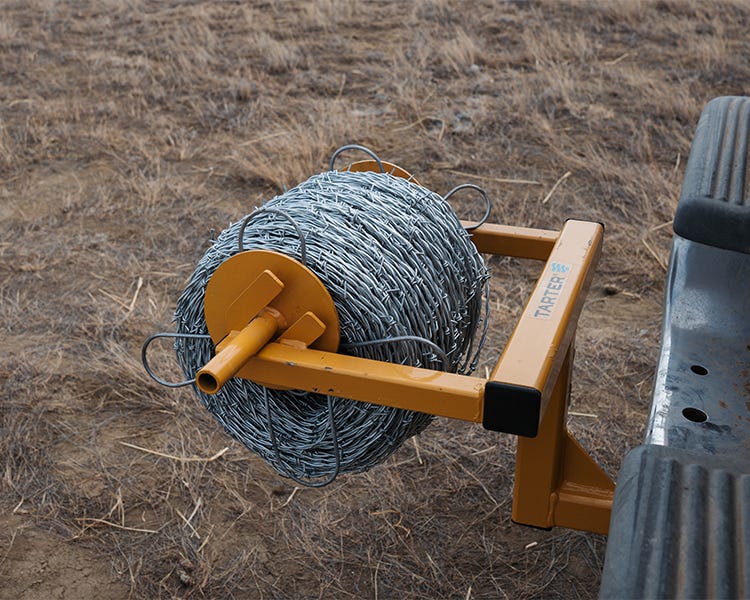
Barb spacing refers to how far apart the barbs are placed along the wire.
With 4 inch spacing, the barbs appear more frequently along the line. That means more contact points across the fence, which can help discourage livestock from leaning or pushing against it.
With 5 inch spacing, the barbs are spread slightly farther apart. The overall wire is the same, but there are fewer barbs across the length of the fence.
Some ranchers prefer tighter spacing for added pressure along the fence line. Others stick with 5 inch spacing because it is a traditional setup that is easier to handle during installation.
Both versions shown in the video use two point barbs, which is the most common configuration for livestock fencing.
Two point barbs provide enough bite to discourage cattle from pushing through the fence without being overly aggressive. For many ranchers, it strikes the right balance between holding livestock and keeping the wire manageable to install and repair.
Fencing in the Northwest
Across Montana, Idaho, and Washington, fence lines deal with more than just cattle.
Elk, deer, drifting snow, and strong winter winds can all put pressure on a fence. Over time, that movement can loosen wire, bend posts, or create sagging sections that need attention.
That is where stronger wire or tighter spacing can help reduce how often you are heading back out to fix things.
Because at the end of the day, every rancher knows the truth about fencing.
If you are fixing fence, you are not doing something else that needs doing.
What We Noticed on the Fence Line
No two fence lines are the same. Terrain, livestock pressure, and weather all play a role in how wire performs over time.
While working on this project, one thing became clear: different wire solves different problems.
High-tensile wire held tension extremely well across longer stretches, which makes sense for larger pastures where fewer posts can save time during installation.
The premium low-carbon wire was easier to handle and bend during setup. That flexibility can make a difference when you are splicing wire or making repairs out in the field.
In the end it really comes down to how the fence is being used and how much pressure that fence line is going to see.
The Bottom Line
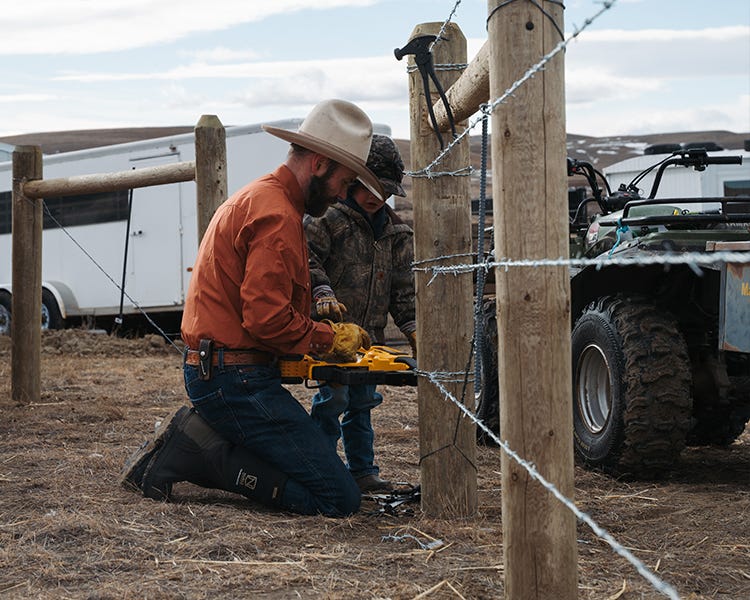
Each of these barbed wire options has a place depending on how you are building your fence.
High tensile barbed wire is built for strength and longer runs.
Premium low-carbon barbed wire is flexible, reliable, and easier to repair when needed.
Barb spacing, whether 4 inches or 5 inches, comes down to preference and how much pressure your fence typically sees.
Whichever route you go, the goal stays the same.
Build a fence that holds so you can spend less time fixing it later.
Barbed Wire Featured in This Review
The fencing wire used in this comparison is available at North 40 stores across the Northwest, including:
OK Brand 14 Gauge High-Tensile Barbed Wire
OK Brand 12.5 Gauge Premium Barbed Wire (4 inch Barb Spacing)
OK Brand 12.5 Gauge Premium Barbed Wire (5 inch Barb Spacing)
All three are manufactured by OK Brand, a family-owned company whose steel is melted and made in the United States.