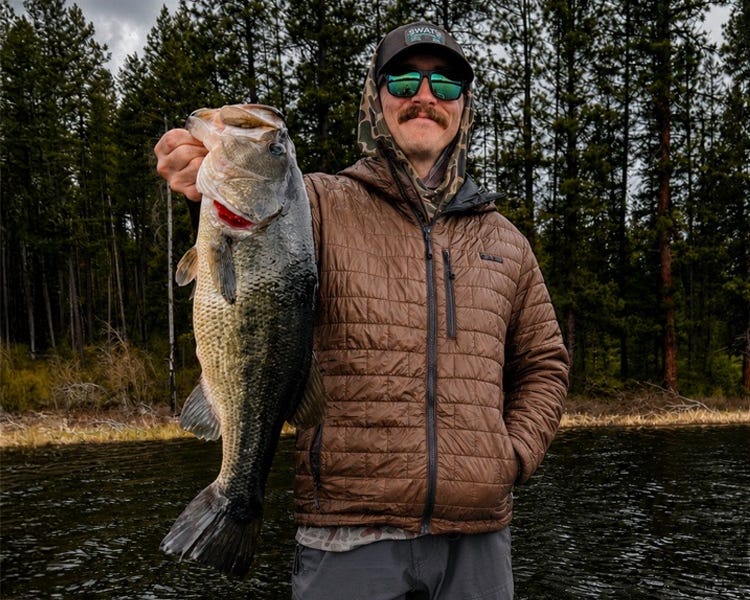
The Big Bait Blueprint: Glide Baits, Wake Baits & The Hunt for Trophy Bass
There’s a different kind of fisherman throwing big swimbaits. You spend all day throwing something the size of a stocker trout for the chance at one fish that’ll wreck your nerves and live in your head for the next ten years.
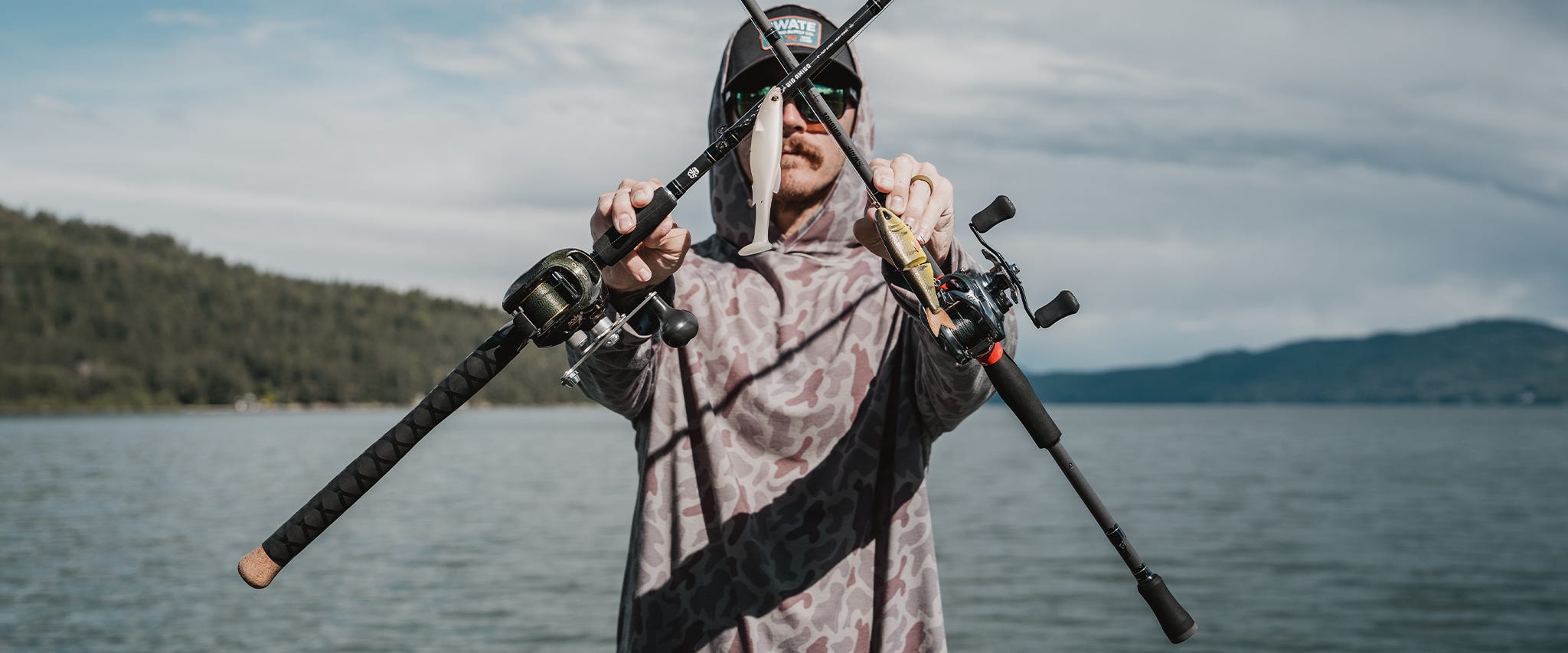
There’s a different kind of fisherman throwing big swimbaits. It’s not about numbers. It’s not about getting five bites every hour. Big-bait fishing is about commitment, confidence and patience. You spend all day throwing something the size of a stocker trout for the chance at one fish that’ll wreck your nerves and live in your head for the next ten years.
And honestly? That’s the addiction. The obsession, if you will.
The big-swimbait world has exploded over the last decade, and the evolution has been pretty wild. What was once a niche technique dominated by West Coast trophy hunters, custom bait builders and hard-to-find Japanese imports has become a legitimate category of modern bass fishing.
In the early 2000s, anglers began experimenting with jointed swimbaits, weighting systems and modified lips to create a bait that would travel with that wide, side-to-side glide. They weren't cheap, they weren't always easy to find, and they certainly weren't something every guy at the boat ramp was throwing.
And that was part of the appeal.
For a while, throwing a glide bait felt like having a secret weapon. Then the secret got out. As more anglers started seeing what these baits could do, the market exploded.
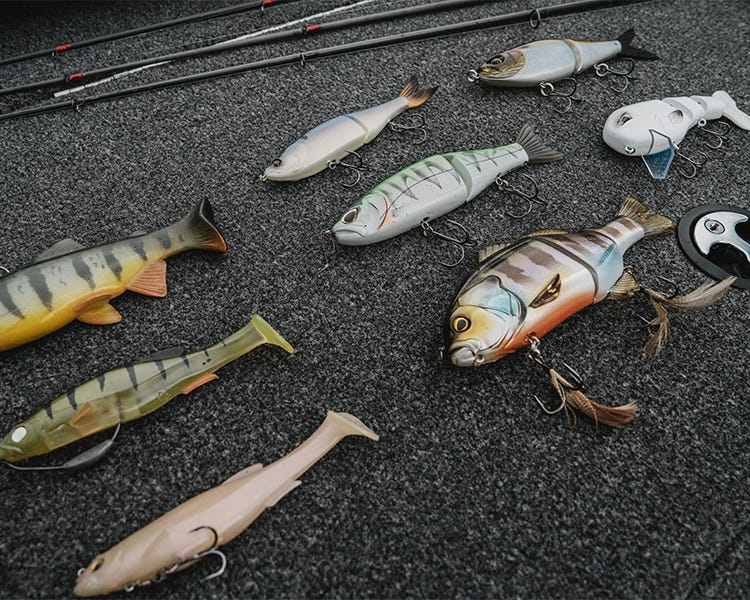
Today, you can walk into a tackle shop and find an entire wall dedicated to big baits. Megabass. 6th Sense. Throwback Baits. Deps. Roman Made. Gan Craft. Strike King. River2Sea. Storm. Berkley. GeeCrack, and dozens of other companies have pushed the category forward with different profiles, actions, sink rates and price points.
And the baits aren't just getting bigger, they're getting smarter. Better balance. More realistic profiles. More refined joint systems. More specialized actions. Different sink rates designed for different parts of the water column. Baits built specifically to imitate trout, perch, bluegill, shad, hitch, kokanee and just about anything else a big bass might consider a meal.
The result is a technique that has gone from somewhat underground to something you'll find in almost every serious fisherman’s arsenal.
But if you're just getting into it, the categories can get confusing quick. Glides. Wake baits. Soft swimbaits. Rats. Multi-jointed baits. Line-throughs. Floats. Slow sinkers. Fast sinkers.
So let's break it down.
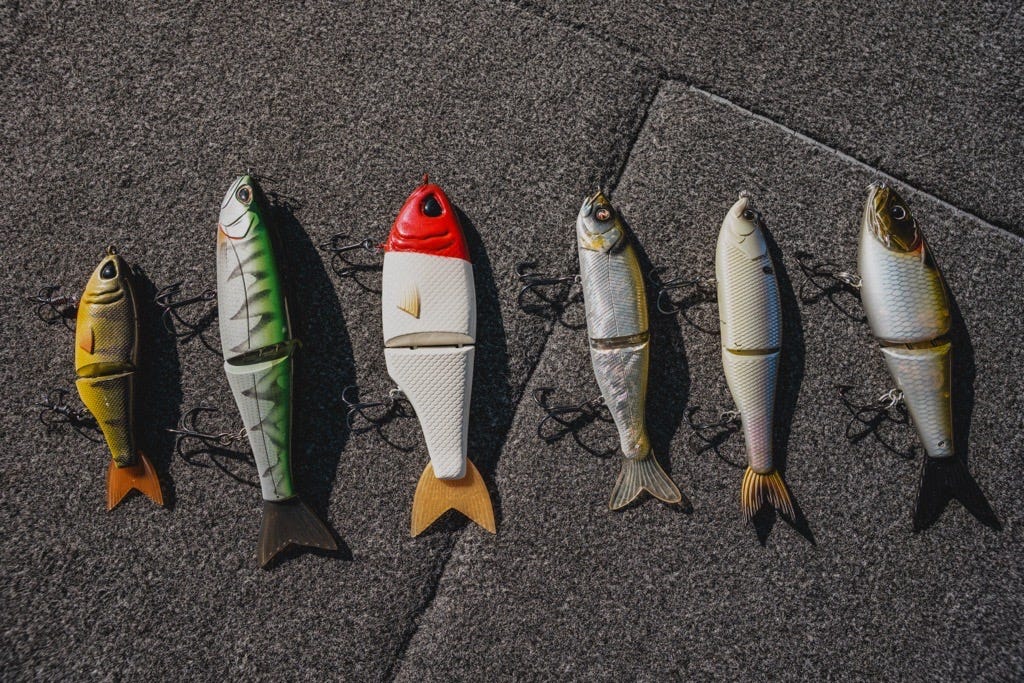
Glide Baits: The Search Bait for Giants
If there’s one bait category that defines modern trophy-bass fishing, it’s the glide bait. Big profile. Wide S-turn action. Slow and deliberate. There’s something about watching a 7-, 8- or even 10-inch bait sweep through the water, pause, change direction and make a big bass turn around and follow it.
That’s what glide-bait fishing is really about: Making big fish move.
The modern glide-bait movement has roots in both California's big-bait culture and Japanese lure development. California anglers were already using enormous swimbaits to target trophy largemouth feeding on stocked trout and other large forage, while Japanese lure builders were refining large jointed hard baits into incredibly balanced, lifelike presentations.
Companies like Roman Made, Gan Craft and Deps became legendary among serious big-bait anglers, producing baits that developed almost cult-like followings. The Gan Craft Jointed Claw, Deps Slide Swimmer and Roman Made baits helped establish what anglers now recognize as the modern glide-bait game.
Then the rest of the industry caught on. Companies like Megabass helped push the category into a much larger market, while American manufacturers like 3:16 Lure Company, and 22nd Century Swimbait Co. began producing their own versions and bringing the technique to a much wider audience.
That's when things really started to take off. What used to mean hunting down a limited-run Japanese bait or spending serious money on a specialized lure became a category with options for just about every angler. Today, you can find glides in nearly every size and price range imaginable. And that's changed the technique. We're not just throwing big baits anymore, we're getting dialed. Different sizes. Different profiles. Different sink rates. Different actions. The goal is to match the forage, the conditions and the fish you're trying to trigger.
A glide bait isn't about vibration or an aggressive tail kick. It's about presence. That wide S-turn gives the bait a natural, deliberate movement that looks like a larger forage fish cruising through the water. A slight twitch of the rod can make it kick in another direction. A pause can make it suspend or sink. A change in retrieve speed can completely alter its personality.
And that's what makes them so interesting. A bass might follow a glide bait for 20 or 30 feet without committing. That’s not necessarily a bad thing; you’re watching the fish make a decision. Sometimes that fish turns away. Sometimes it follows all the way to the boat. And sometimes one final turn or pause is enough to make that fish absolutely smoke it.
That's why you don't pull a glide bait out of the water early. The fish following it is part of the deal.
A good rule of thumb is when water temperatures sit consistently between 55–70 degrees, although the right window depends heavily on the fishery and forage. Late pre-spawn through the spawn can be excellent, and fall can be absolutely money as bass start feeding heavily before winter.
But don't get locked into a calendar.
Watch the fish. Watch the bait. Watch the water. And most importantly, slow down. The biggest mistake beginners make is fishing them too fast. A glide bait isn't a crankbait, you're not trying to burn it back to the boat.
Let it work. Long pauses. Slow turns of the handle. Subtle rod movements. Direction changes. Make that bait look like something alive.
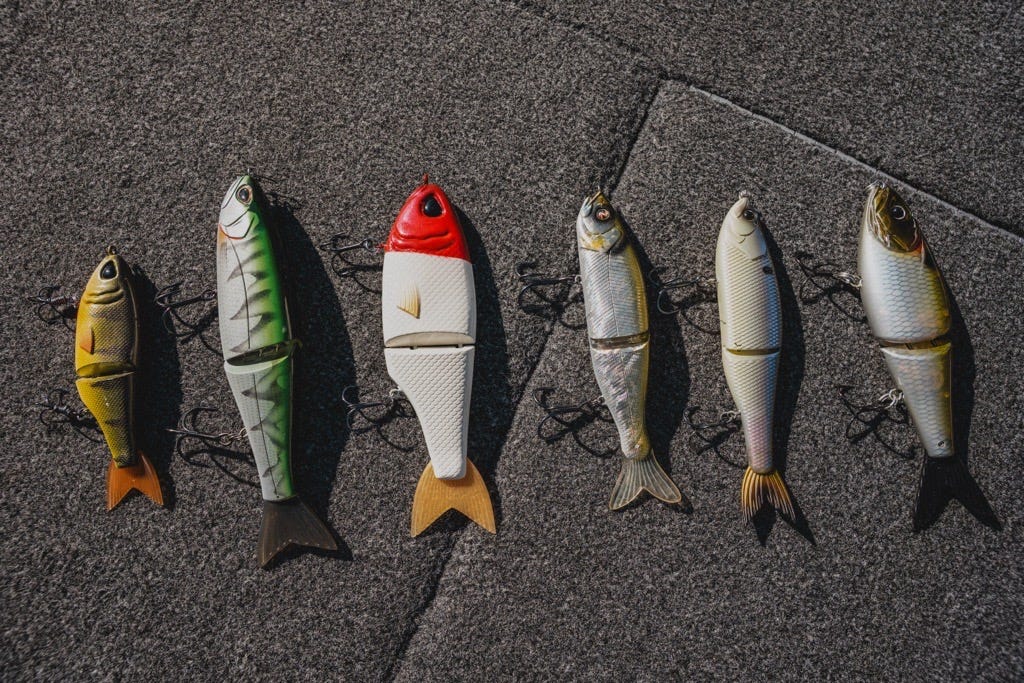
Battle-tested Glide Baits:
- 6th Sense Draw
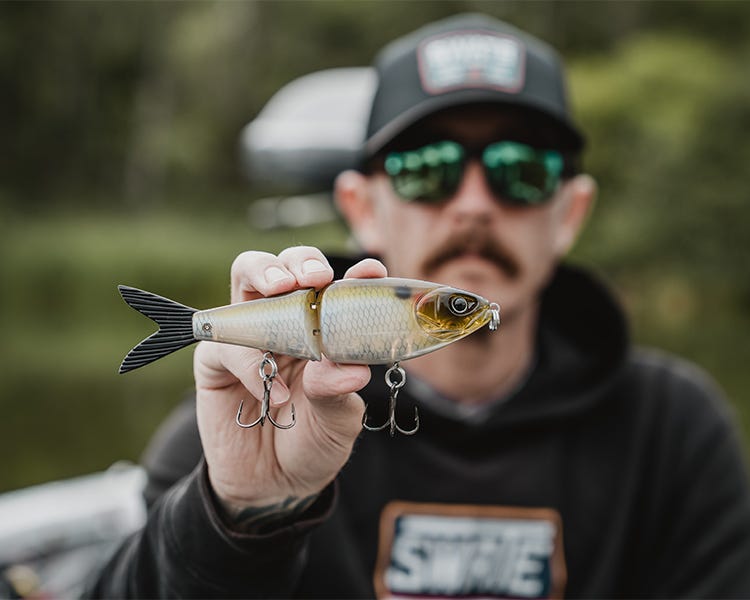
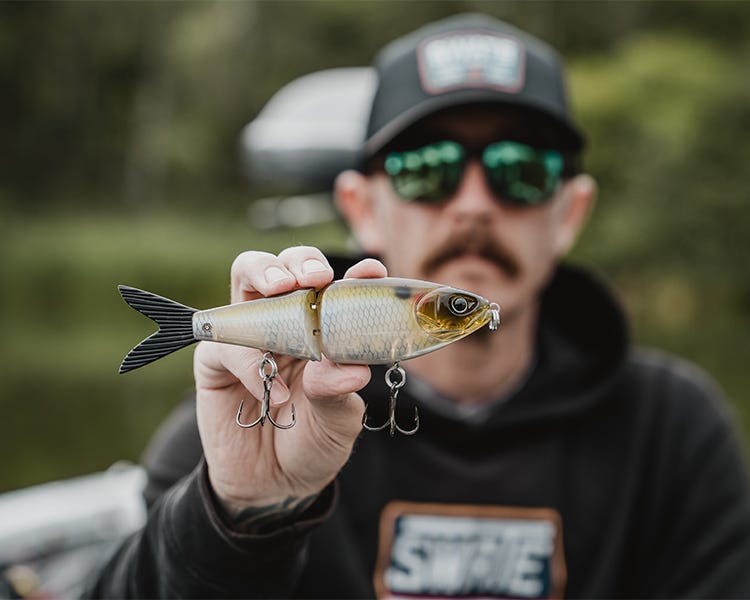
- Strike King Hogfather Jr. (Pictured below)
- Storm Arashi
- Throwback Baits Metro & Minne (Coming soon!)
- River2Sea S-Waver
- Clutch Swimbait Co.
Soft Swimbaits: Big Profile, Bigger Commitment
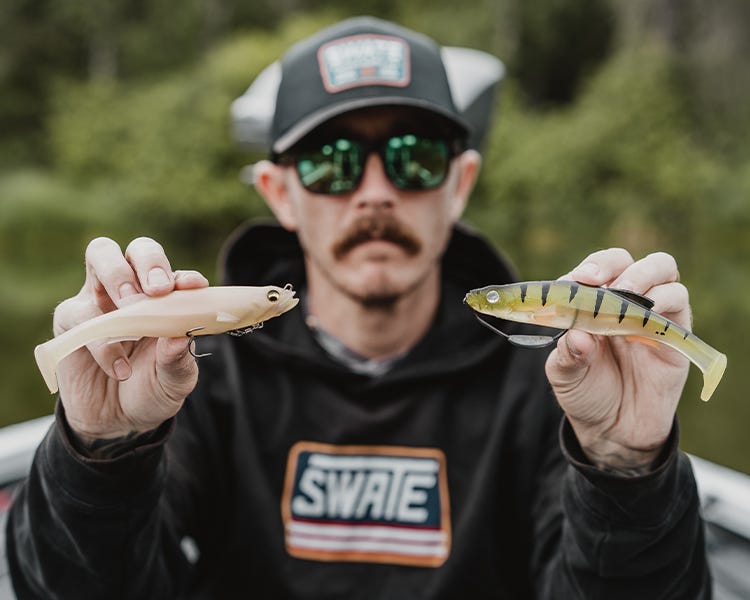
Soft swimbaits are probably the most versatile category in the big-bait world. These are your trout imitators, perch profiles, bluegill profiles and big paddle tails designed to cover water and get freight-trained. They shine when fish are feeding on larger forage and actively moving.
This is where companies like Megabass have made serious noise, creating soft swimbaits that maintain a natural action even at slower speeds. The Magdraft and Magdraft Freestyle get a ton of attention, and for good reason. They have become staples for anglers looking to target big fish around a variety of cover and forage.
Don't overlook the Huddleston either. Its slow, deliberate tail action has been putting giant bass in the boat for years.
Berkley has also been quietly stacking up wins over the last couple of seasons. The CullShad came out swinging with an action that runs eerily close to the Magdraft, and it does it without making your wallet cry. Rip it, kill it, let it fall. Fish don't care what's on the price tag.
Then there's the Berkley Nessie. If you've been eyeing soft glide baits but aren't ready to dive headfirst into the high-dollar Japanese rabbit hole (we've all seen that bank statement), this is your on-ramp. It's got a wicked, unique action, it's dead simple to fish, and it's already earned a reputation as a straight-up fish-catching machine. Tie one on, throw it at some structure, and let the bait do the talking.
One thing about soft swimbaits: Confidence matters. You can go hours without a bite. Then suddenly one gets hammered, and that one fish makes the whole day worth it.
That's swimbait fishing at its finest.
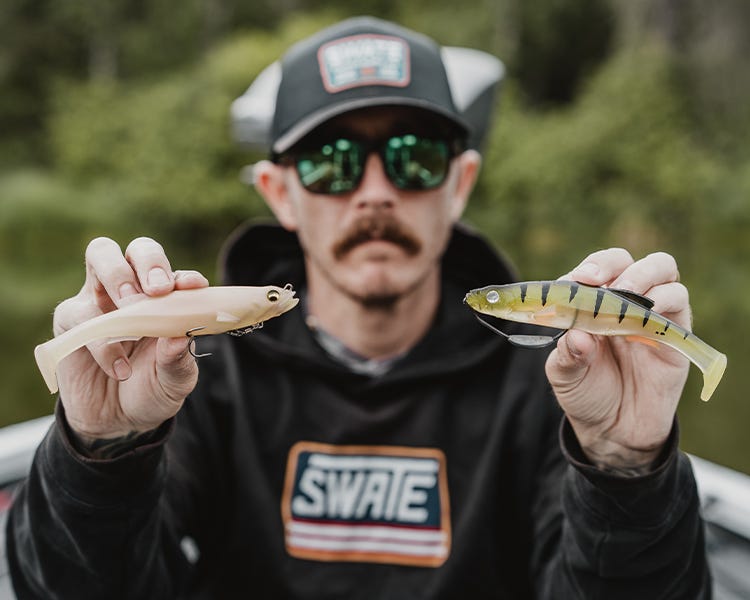
Swimbaits pictured below: Megabass Magdraft and Megabass Magdraft Freestyle
Wake Baits: Loud, Slow & Violent
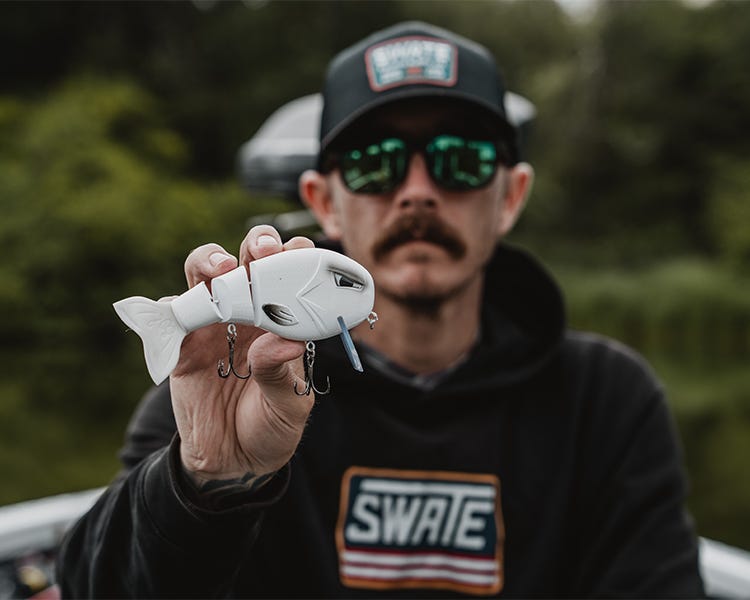
Wake baits might be the most addictive way to catch a big bass. There’s just something different about watching a fish rise up and absolutely destroy a bait crawling across the surface. Wake baits create a heavy V-shaped disturbance that can call fish up from a distance. They're particularly effective when big bass are willing to move shallow and look up.
And when they eat it? It's chaos. Talk about getting your adrenaline pumping.
The key with wake baits is cadence. Too fast and you can blow out the action. Too slow and you lose some of the bait's drawing power. You want a steady crawl that keeps the bait hunting naturally across the surface.
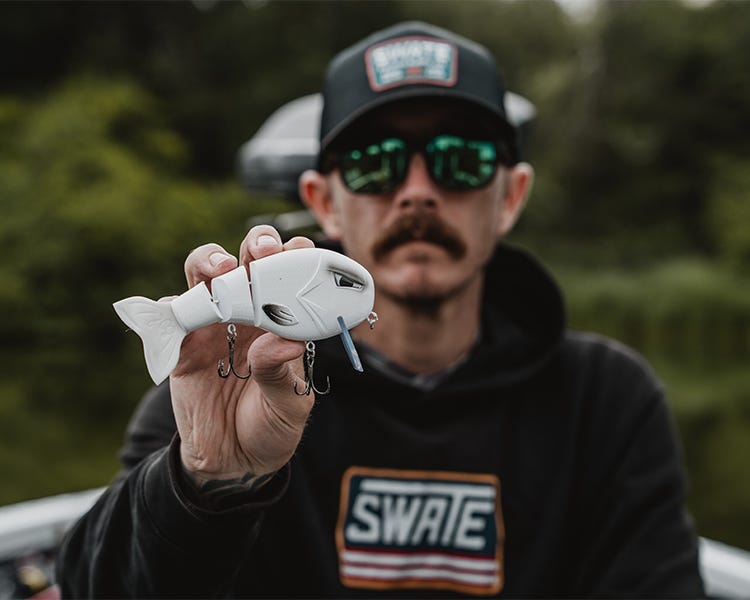
And keep your eyes on the bait. Some of the coolest swimbait bites happen when you see that wake disappear before you ever feel the fish. One of my absolute favorite wake baits to tie on is the Throwback Baits WakeWalker (pictured below); It flat-out gets eaten, and mean-mugs while doing it.
Some other killer ones on the market:
- Megabass Suwitch
- GeeCrack Gilling Nep 160F
- Deps MT Wake Jet
- Clutch Wake Gill
Matching the Hatch Matters
The best swimbait fishermen aren't just randomly chucking giant baits around. They're paying attention. What's the lake feeding on?
- Bluegill populations
- Trout stocking schedules
- Hitch or shad presence
- Perch
- Kokanee
- Water clarity
- Seasonal forage movements
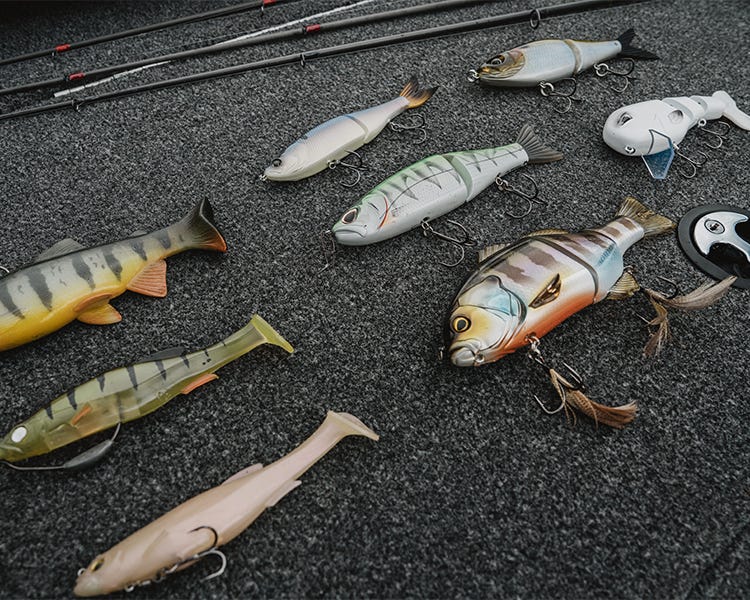
Big fish want efficient meals. If your lake is full of stocked trout, a trout profile makes sense. If bass are eating bluegill around docks and shallow cover, match that. If they're pushing schools of kokanee against a windy bank, throw something that looks like what they're eating.
It sounds simple, but this is where big-bait fishing gets really interesting. You're not just throwing a giant lure, you're presenting a giant meal.
That's where companies like Megabass, Throwback Baits and 6th Sense Fishing have really pushed the category. The profiles, colors, actions and realism available today are on another level compared to what anglers had access to years ago.
Best Time to Throw Big Baits
There’s no single month, water temperature, or weather condition that makes big baits work. The best time to throw them is when the conditions give a big bass a reason to eat a big meal.
Spring, fall, and transitional periods are some of the best windows. In spring, bass are moving toward shallow water and staging around secondary points, flats, creek mouths, and spawning areas. In fall, they’re feeding aggressively on baitfish and putting on weight for winter. Those seasonal movements create some of the best opportunities to show a big fish a high-calorie meal.
Weather and light can make a big difference, too. Cloud cover, overcast skies, light rain, and changing weather can get fish moving and make them more willing to track a larger presentation. Wind is another big one. Wind around 10–15 mph can break up the surface, push baitfish into key areas, and make a big bait look more natural.
Clear water is especially interesting. A bass can track a glide bait for a long distance, inspect it, turn on it, and follow it all the way to the boat. But don't assume dirty water automatically kills the technique. Big baits have presence. That larger profile and vibration can help a fish locate your bait when visibility is limited.
Then there are the low-light windows. Early mornings, evenings, cloudy days, and summer nights can be prime time for wake baits when big fish are willing to look up. Around shallow grass, flats, docks, and other cover, a slow-moving wake bait can call a fish up from surprisingly far away. The surface doesn't have to be glass, either. A little chop can actually make the bait look more natural.
Soft swimbaits are the workhorses of the big-bait game. They can produce throughout the year, from spring through winter. In spring, work them around staging flats, secondary points, creek entrances, and areas where bass are moving shallow. In fall, follow the baitfish. Midday through afternoon can be especially good once the water warms and bait starts moving. Even winter can produce during the warmest part of the day, especially around rocks, boulders, shallow structure, or areas that receive a little extra sun.
The other thing I’m always looking for is where the biggest forage is showing up. Baitfish schools. Wind-blown banks. Grass lines. Deep points. Secondary points. Creek channels. Flats adjacent to deep water.
If the bass are chasing bait, a soft swimbait can cover water and imitate the forage they're feeding on. If the water is clear and fish are willing to track something, a glide bait can make them commit from a long way out. If they're shallow and looking up, slow down and let a wake bait do the work.
Don't throw a big bait because the calendar says you should. Throw it because the conditions give a big fish a reason to eat it. That’s when big-bait fishing really starts to make sense.
Gear Matters More Than You Think
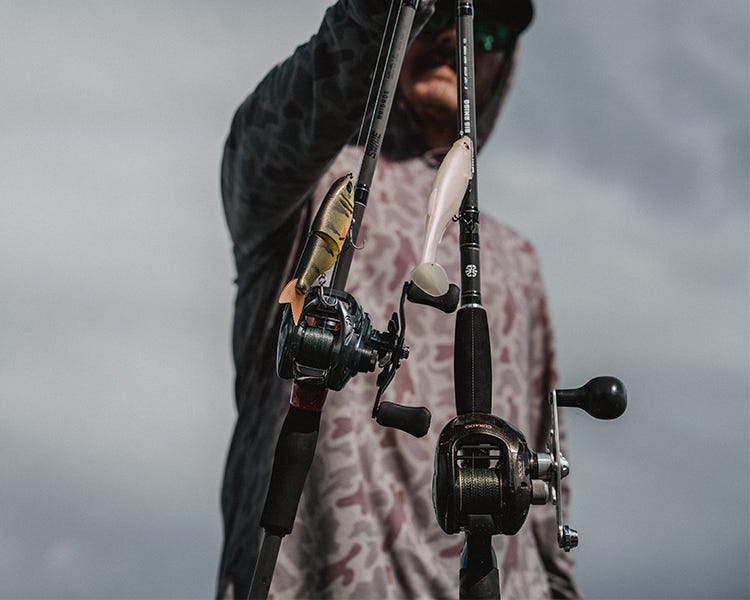
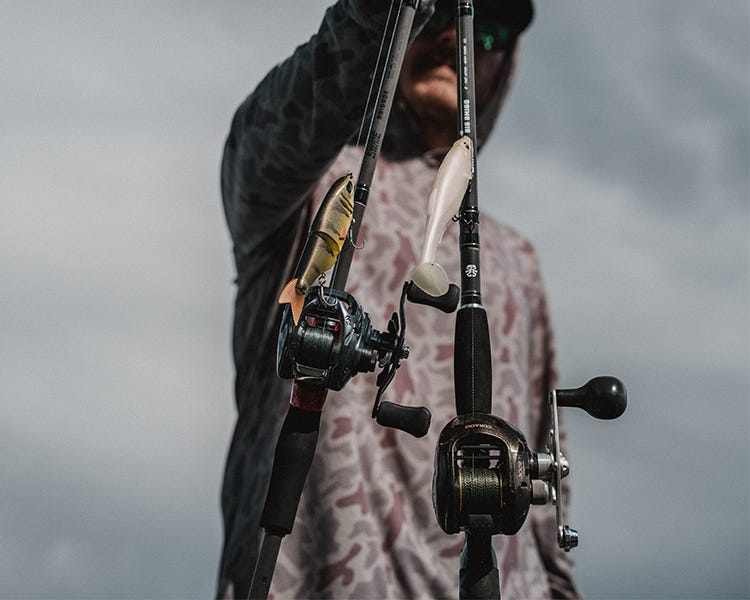
Throwing big baits all day with the wrong setup will absolutely wreck you. You're moving more weight, making harder casts and putting more stress on every component of your setup. You need equipment that can handle it.
For rods, choose medium-heavy to heavy-power models with moderate to fast actions, depending on the size and style of bait you’re throwing. For example:
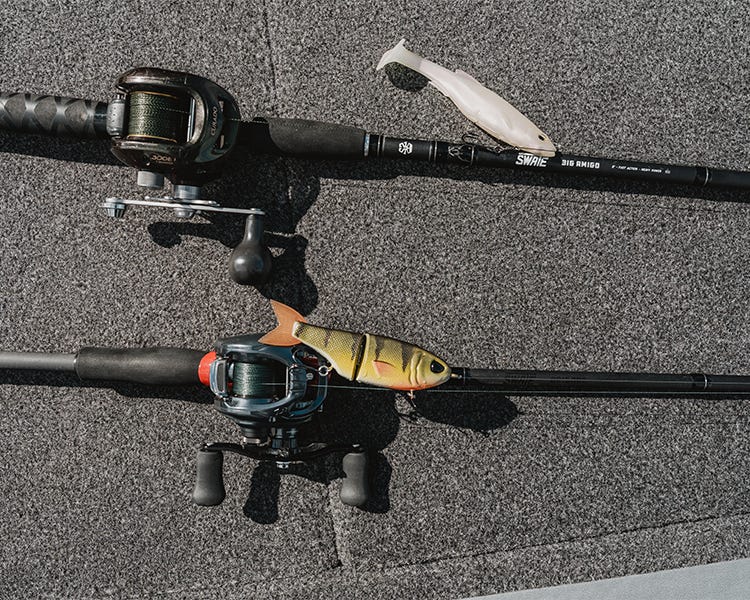
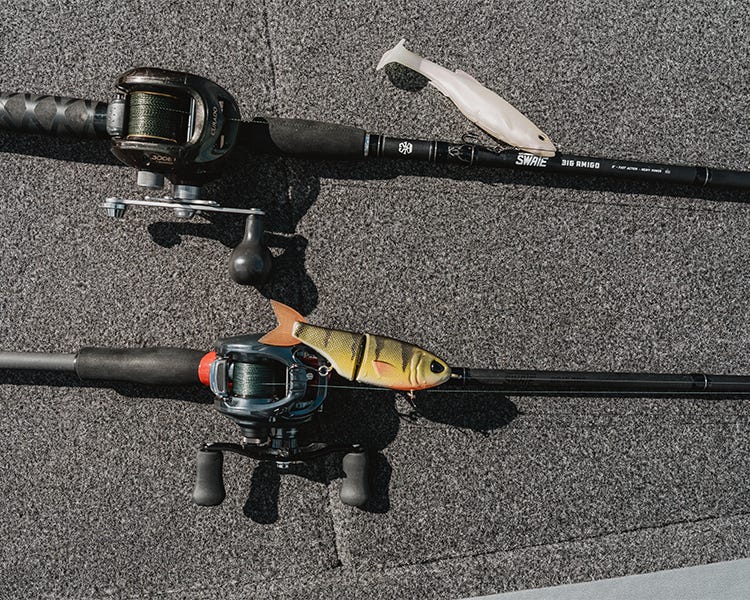
The Swate Brigade Black Label 7'2" MH Moderate-Fast is great option for smaller-profile swimbaits and lighter big-bait applications.
Then there's the Swate Big Amigo, an 8-foot heavy, fast-action rod built for throwing those bigger 8–10-inch swimbaits when you need to move some serious bait. The longer rod also gives you more control over the bait and helps manage a big fish at the boat.
You want a reel with the guts to handle big baits and the drag system to deal with a serious fish. Some good places to start:
A moderate gear ratio of around 5.1:1–6.3:1 can be ideal for slower, steady presentations. A faster reel around 7.1:1 can be useful with glide baits when you need to pick up slack quickly, manipulate the bait, or get back down to a fish after a strike.
There's no single perfect setup. The right combination depends on the bait, retrieve, and fishery. But one thing is universal: Big fish expose bad gear quickly.
There are plenty of other good swimbait reels on the market. The important thing is getting something built to handle the workload. Don't cheap out on the reel. A big bass hitting a big bait is not the time to discover that your drag sucks.
You can spend serious money on the perfect swimbait, rod, and reel, but if you're running the wrong line, you're leaving yourself open to a heartbreak you don't want. Big baits mean bigger hooks, heavier fish, and more stress on your entire setup. Your line needs to handle the workload.
Fluorocarbon is a go-to for glide baits and soft swimbaits, especially when you're fishing clear water. It sinks, has good abrasion resistance, and gives you a direct connection to the bait. It's a solid choice when you want to work a glide with precision or fish a soft swimbait around rocks, points, and other structure. Just remember that heavier fluorocarbon can affect how a bait sinks and moves, so pay attention to how your setup behaves in the water.
Braid brings serious strength to the table, with little-to-no stretch and a smaller diameter for its breaking strength. It can be a good option around heavy grass, thick cover, or when you're throwing larger baits. But that lack of stretch cuts both ways. When a big bass eats, don't swing like you're trying to launch it into the next county. Keep your rod loaded, stay connected, and let the hooks do their job.
Monofilament still has a place in the big-bait game, especially when you're throwing wake baits or other presentations you want to keep higher in the water column. Mono floats and has more stretch than braid or fluorocarbon, which can help absorb a hard strike and keep fish pinned during the fight. That extra stretch can be a real advantage with treble-hook baits, where an overly aggressive hookset can pull hooks free.
There's no single line that handles every big bait perfectly. Your choice comes down to the bait's weight, hook setup, cover, water clarity, and how you want it to move. Line diameter, knot strength, and abrasion resistance all matter when you're throwing expensive baits around fish that can change your whole day in one bite.
A good starting point: 65–80 lb braid with a 15–25 lb fluorocarbon leader can work for certain big-bait setups, or straight 15-25lb flouro or mono, but don't treat those numbers as a universal formula. Match your line to the bait, rod, reel, and conditions.
Whatever your setup calls for, get your line dialed here.
Big Bait Storage: Protect the Arsenal
Now let's talk swimbait storage, because keeping big baits organized is a headache in itself. Individual lure wraps? Been there. Big Plano-style boxes with $100+ baits bouncing around? Also been there.
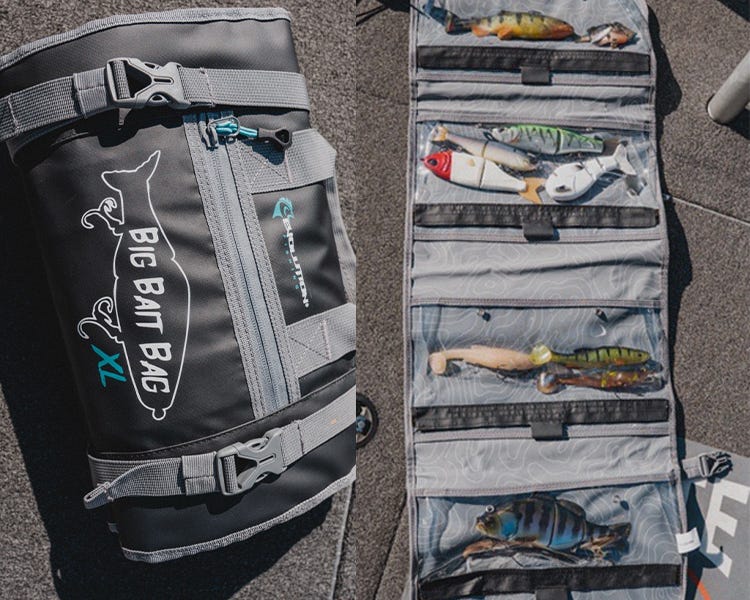
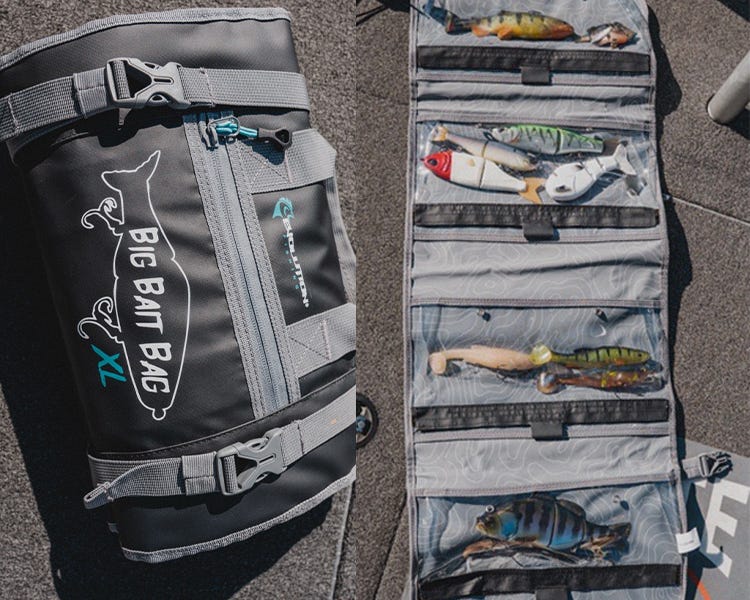
Then I found the Evolution Fishing Big Bait Bag. Absolute game changer. It's a premium roll-up storage system built specifically for large glide baits and big swimbaits. Instead of having expensive baits bouncing into each other, getting scratched up or beating the heck out of their hooks, everything stays separated, protected and organized.
And when you're carrying a pile of big baits, that's a big deal. Hooks stay cleaner. Baits aren't getting beat up. And you can actually see what you have instead of digging through a giant box of expensive tackle.
I personally went with the biggest option because, let's be honest, I knew I'd fill it up fast. They've got multiple sizes depending on how deep you're into the big-bait game.
This is easily the best swimbait storage setup I've found yet. Here's mine, all dialed in.
The Real Secret to Swimbait Fishing
The biggest difference between the guy who occasionally throws a swimbait and the guy who consistently catches giants on them isn't necessarily the bait. It's commitment. You have to believe the next cast could change your season. Because sometimes it does.
Big-bait fishing isn't about numbers. It's trophy hunting. It's slowing down. Finding the right water. Watching the conditions. Paying attention to forage. Learning how your bait moves. Learning how fish react to it. And then being willing to make another cast when you've already made 400.
That's the part people don't see. They see the giant fish. They don't see the thousands of casts behind it. They don't see the follows that didn't turn into bites. They don't see the fish that ate it at the boat. They don't see the days where you threw a bait the size of a small trout for eight straight hours and never got a nibble.
But that's why the bite means so much when it finally happens. One bite. One giant. One fish that makes the entire day, or sometimes the entire year. That's the big-bait game.