
How much lawn can you cut with a battery mower?
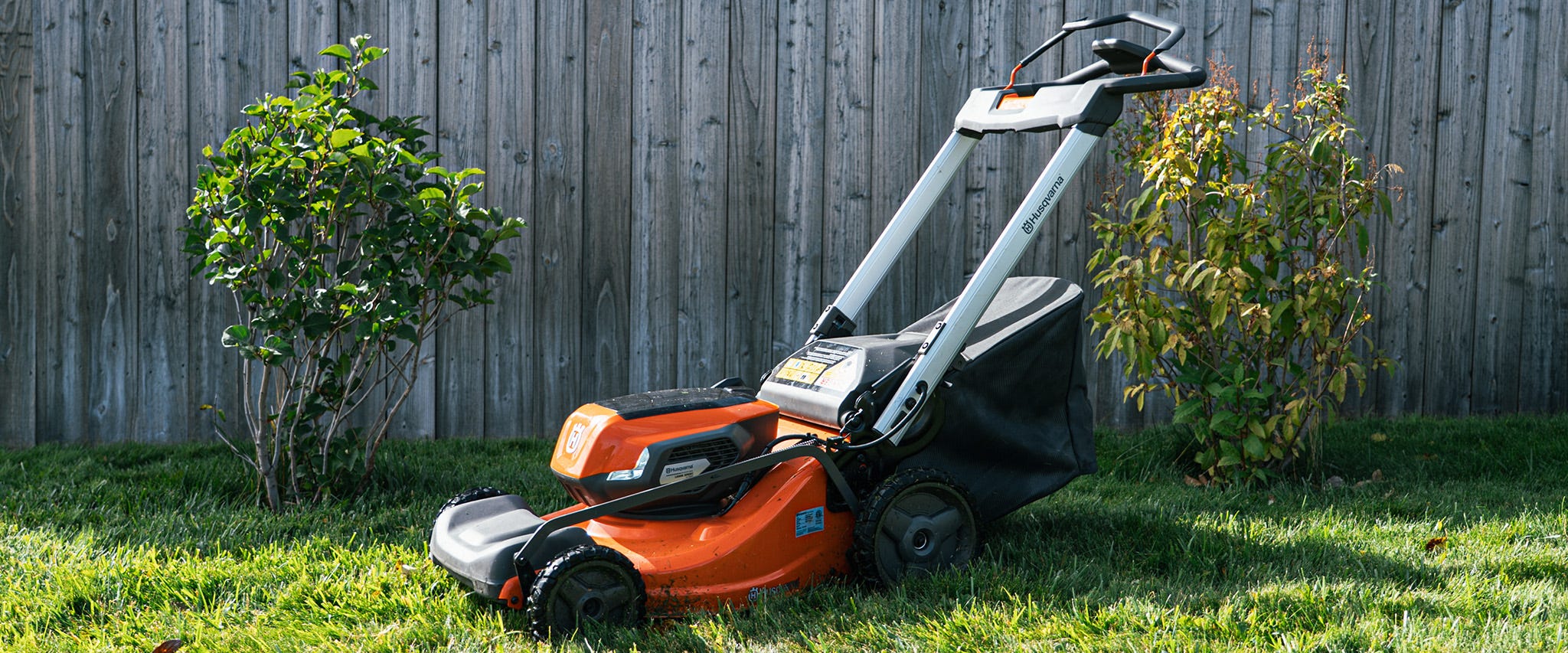
The full season review of the Husqvarna Lawn Expert 322
Will a battery mower last for your entire lawn on one charge?
If you’ve entertained making the switch from a gas lawn mower to a battery powered one, this is the blog you need to read. While battery technology is moving forward quickly, pulling the trigger and moving away from something that you can just fill up from the tank to something that has no tank seems a little tricky. There are a lot of features on new lawn mowers, and we’ll talk about whether they were worth it or not, but it really comes down to a fundamental question: will it last? There are other questions about the power and quality of the cut, but if I have to stop mowing my lawn in the middle of the task to wait for a battery to charge, for me, it’s not worth it. If the mower comes with one battery and it would take two to finish my lawn, then, to me, it’s not worth it. Will it last long enough to cut my whole lawn. We think we’ve found the best solution – the Husqvarna Lawn Expert LE-322R... And we’ll tell you why.
We’ll unpack some of the bells and whistles here but let’s start by answering that big question: will it last? First, know that both Travis and I used the Husqvarna for an entire summer lawn season and did so exclusively – not using our existing mowers. We spent the time walking behind the mower week after week, not just once or twice. Here are our conclusions, starting with that big question.
A lot of power tool companies are coming out with battery powered outdoor power equipment from mowers and blowers to trimmers and chainsaws. DeWalt, Milwaukee, Honda (who stopped making gas powered mowers altogether in favor of focusing on a battery-powered version), and STIHL to name a few that we carry at North 40. We chose the Husqvarna for a few reasons. First, the company has a long reputation for quality and reliability. Second, the price was in the middle of the pack at $950 (the battery powered mower market ranges from around $700 up to about $2,000). Finally, this mower came with something important: two batteries and a charger at no extra cost. That’s the base model for $950. If there was a mower that was going to get the job done without having to go and get extra batteries, it was going to be this one.
The Big Question
To cut to the chase, I mowed my entire lawn, which is about 6200 sq. ft., and Travis mowed his, which is about 4200 sq. ft., and at the end of that, the batteries were at about 25%. There was more than enough longevity in the batteries, but that’s not all. They charge fast. From 0% to 100% took just over an hour per battery. That big question was answered. We even ran it a second time without charging the batteries in between and were able to get more than 50% finished. Enough power. Enough life. Fast charging.
As for the other features and accessories, most of them were easy to use and very functional. The plug that enables mulching is easy to install and the bag fills up completely when bagging, thanks to sensors that ramp up the RPMs when more power is needed (this is a nice feature that most gas mowers don’t even come close to). The side discharge chute attaches just like the bag does, though, for our application, this was the attachment we’d probably use the least.
As for the quality of the cut for us lawn nerds, there are 3 options that Husqvarna calls “cut modes”: “sensing”, “mulching/high quality”, and “max power”. We ran it in “sensing” mode mostly and the quality was great, but we did notice that when on either of the other modes the battery tended to drop a lot faster.
Two really nice features
One great feature was the option to operate the drive mode without having the blades powered up, so moving from one part of the yard, like from the back yard to the front, was extremely easy. In fact, having never used a self-propelled mower before, this one was a breeze and required very little effort physically – I mostly walked behind it with one hand on the safety controls. A second feature that is unique to mowers, though becoming common to battery mowers, it the ability to fold it flat and stand it up - there are no fluids to leak out on your garage or shed floor. Watch the video to see this in action, but it’s a real space saver.
One annoying design flaw
There was one thing that we think could have been designed better – the self-propelled speed control lever. It’s a paddle lever that has tactile increments, but it’s the position of it that is just wrong. When you swing the mower around at the end of a pass to reverse direction, it’s hard NOT to hit that lever with a part of your waist or belt buckle or stomach, and when you hit it, it’s going to ramp the speed up to 11. The first time it happened to me it nearly jumped out of my hands. Don’t get me wrong – it wasn’t dangerous – I just felt like I had to trot to keep up with it. After it happened a few times though, I just decided I was going to kill two birds with one stone: get some exercise and get my lawn done faster. So, I kept it at 11. After a few cuts, I got used to the speed and just walked at a clip, but it is a design flaw.
Overall, we give this mower a 9 out of 10 from The Fix. The battery lasted, the cut quality was great, and… our lawns got done a lot faster. For $950, we think it’s a good buy if you’re looking to make the switch or upgrade an older battery mower.
If you think you’ve got a mower that can outperform the Husqvarna Lawn Expert LE-322R, than get it to us and we’ll put it through it’s paces and let everyone know what the results are.
Watch More Episodes of The Fix



Tucker brings more than 15 years of hands-on experience in construction and remodeling to the North 40 blog. His background includes interior and exterior carpentry, plumbing, electrical work, drywall, and a wide range of repair and building projects. Years of solving real-world problems on the job have given him a practical perspective on the tools, techniques, and materials that help get work done right.
A dedicated tool user and industry enthusiast, Tucker enjoys following the latest innovations from manufacturers and exploring how new designs can improve efficiency, performance, and results. Whether tackling repairs, building something new, or testing the latest equipment, he’s always looking for smarter ways to work. Tucker has called Montana home since 2014 and has been part of the North 40 Outfitters team since 2025.