
Raising Meat Birds: What We Learned the Hard Way
Tanya works in our Wellness Department here at North 40, but when she’s off the clock, she’s usually back home on the homestead she and her husband, Adam, have been building for years. Raising their own food is a big deal to them, and meat birds are a big part of that. She’s learned a lot the hard way, and she’s the first to tell you what actually works and what just sounds good on paper. This is her take on raising meat birds and the lessons that stuck.
Around here, meat birds take their time. Most folks say eight weeks gets you a full‑grown bird, and they aren’t wrong, but we usually run nine or even ten. Free‑ranging slows them down a bit, and we’d rather have birds that spent their lives moving than sitting in a pen.
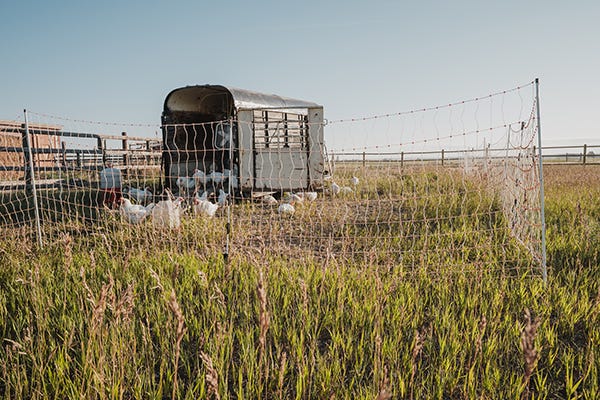
Right now, we use a horse trailer for their shelter, but we don’t keep them in there forever. It’s just a tool, a way to move them around the field in a more controlled way without chasing birds all over the place.
The First Big Mistake
Our first year, we thought we were being efficient by keeping the meat birds in the same coop as our laying hens. That lasted about five minutes before we realized how bad of an idea it was.
• Feed competition — Layers need calcium. Meat birds need protein. You can’t run both on the same ration without someone losing out.
• Mess — Meat birds are heavy eaters and even heavier mess makers.
• Slow growth — Competing with hens for space and feed drags out the grow out time.
The coop got filthy, the hens were annoyed, and the meat birds weren’t growing the way they should. We swore we’d never do that again.
The Chicken Tractor Phase
The next year, we built a little chicken tractor out of 2x4s, a hog panel, and some shade cloth. Nothing fancy, just enough to keep them contained and give them some protection. We dragged it around the field, and for a small batch, it worked fine.
But then we started raising more birds. Twenty‑five at a time. Then fifty. Then a hundred. That little tractor wasn’t cutting it anymore.
The Trailer
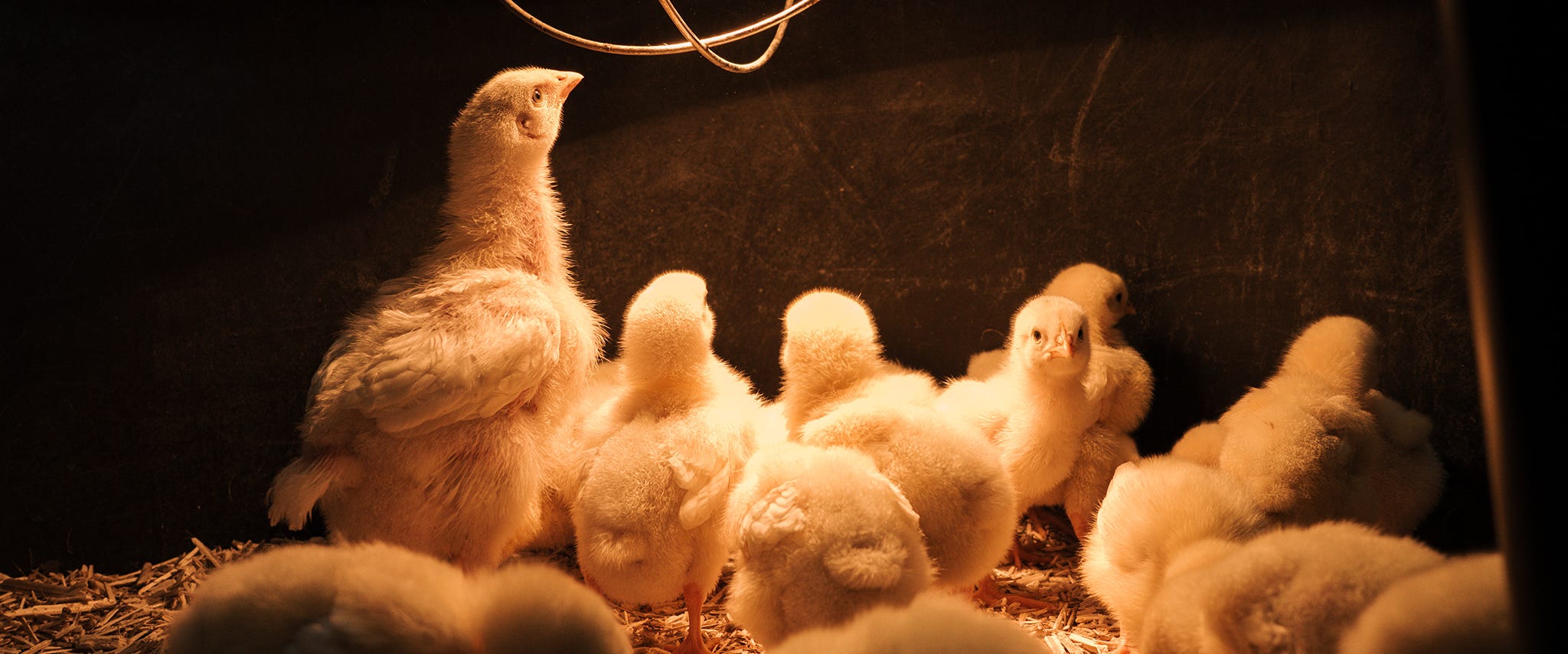
We found a trailer at an auction for $100. Someone had already boarded the inside, so half the work was done for us. We predator‑proofed the back with wire fencing, added a fan for airflow, and hung a heat lamp for the early weeks. There’s a little ramp off the back so they can get in and out on their own.
In about a week, we’ll haul the whole setup out into the field and run hot fencing around it. It’s simple, tough, and easy to move, exactly what we needed.
The Owl Problem
Last year was the first time predators gave us trouble. Owls swooped in and picked off a couple birds. Meat birds aren’t exactly known for their speed or agility, so we had to get creative.
What worked:
- Noise — A boom box blasting 80s hits
- Light — Disco lights and reflective junk
- Movement — This year, we’re adding a wacky inflatable tube man (American flag edition)
It sounds ridiculous, but predators hate unpredictable motion and sound. If it keeps the birds alive, we’ll try it.
Summary
Raising meat birds isn’t complicated, but it does take trial, error, and a setup that actually works for the number of birds you’re running. We learned the hard way that mixing them with layers slows everything down, that a small tractor only gets you so far, and that predators will always test your system. The horse trailer, the hot fence, the lights, the noise all add up to a process that keeps the birds moving, safe, and growing the way they should. By the time they hit that 8–9 week mark, you’ve put in the work, and you end up with a solid, healthy bird that’s worth the effort.