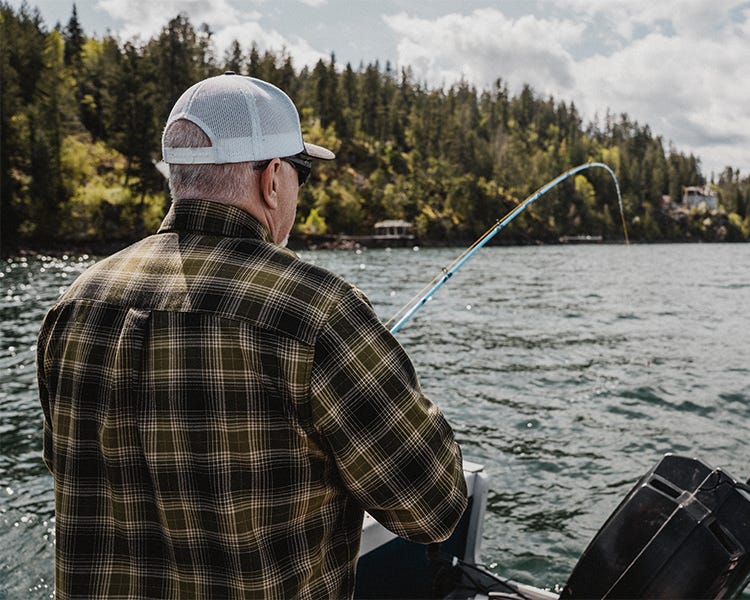
Spring Kokanee Tactics That Consistently Put Fish In The Boat
From dodgers to trolling speed, here’s the setup serious kokanee anglers trust.
Kokanee are the landlocked freshwater version of sockeye salmon. Unlike their ocean-going relatives, they spend their entire lives in lakes and reservoirs, living in deep, cold water and constantly roaming in search of food. On the surface, they may not seem like the most intimidating fish in the lake, but anyone who has spent time targeting kokanee knows how addictive they can become.
One of the things that makes kokanee so unique is their diet. They primarily feed on zooplankton, microscopic organisms drifting throughout the water column. Instead of aggressively chasing baitfish like trout or salmon often do, kokanee filter-feed using specialized gill rakers that strain food directly from the water. Because their food source moves constantly, kokanee spend much of their lives suspended offshore in open water, following temperature and plankton levels throughout the seasons.
That constant movement is part of what makes them so fascinating to chase. One day, they may be holding shallow and feeding aggressively, and the next, they seem to vanish into deeper water. Water temperature plays a huge role in their behavior. Kokanee thrive in cold, oxygen-rich environments, which is why they often suspend deep during the hotter parts of summer. In spring and early summer, however, they commonly move higher into the water column, making them much more accessible to anglers trolling the upper 20 to 40 feet of water.
And maybe that’s part of what makes kokanee fishing so engaging. There’s always a puzzle to solve.
That being said, let's jump into some tried and true tactics for hooking into some Kokanee!
The Breakdown
When it comes to consistently catching kokanee, having a dependable trolling setup can make all the difference. This particular combination of gear, trolling techniques, and presentation has proven effective time and time again on the water and doesn’t require spending a ton of cash to get started.
A setup that I often use is an all-Kokanee Co. rig, centered around one of their popular Wonder Bread flashers paired with a Spaz lure. Both have become standout producers for kokanee anglers targeting fish in the upper water column.
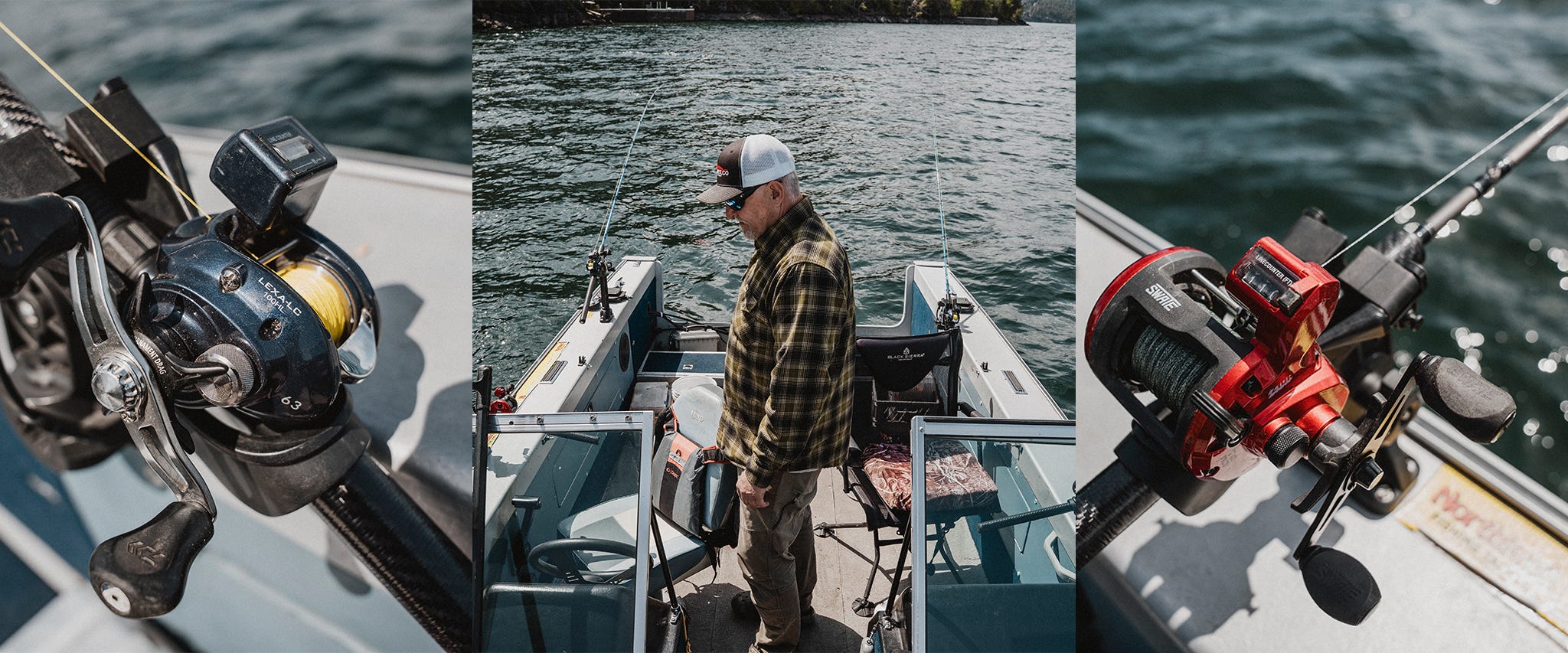
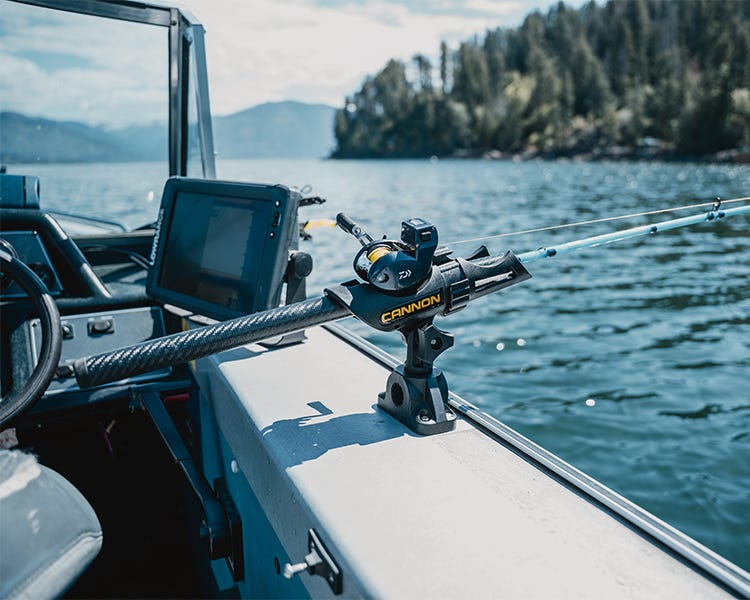
Another important part of kokanee fishing is using a line-counter reel such as the Daiwa Lexa or the Swate Zephyr. Kokanee often change depths throughout the day depending on light, temperature, and feeding activity, so being able to repeat a specific depth consistently can make a big difference once fish are located.
Pairing that with a softer rod, like the Swate Fiberhammer, helps keep steady pressure on fish without pulling hooks free. Kokanee have delicate mouths, so a rod with a sensitive tip helps absorb sudden head shakes and keeps the fight controlled without needing to overpower the fish.
The Rig
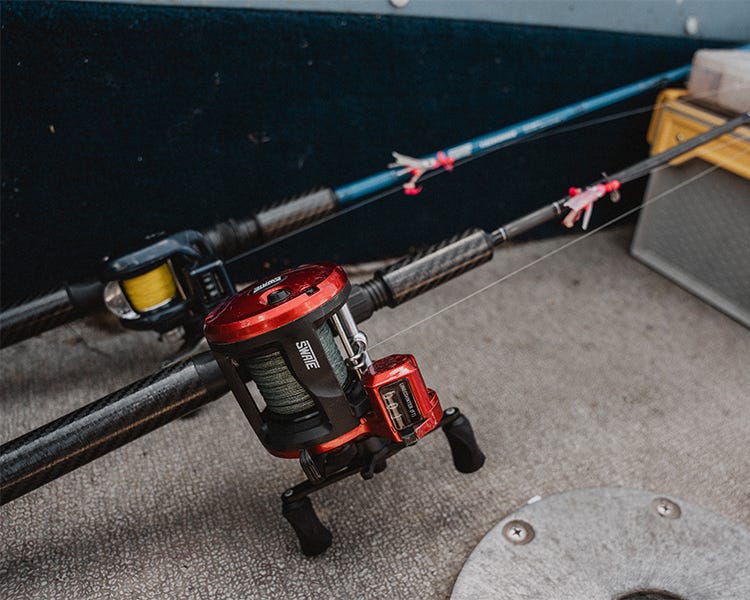
When rigging a kokanee setup, the goal is to keep everything tight, simple, and active. A small lure in bright colors like pink or orange is typically run behind a flasher such as a Wonder Bread pattern, since those colors tend to stand out well in the upper water column where kokanee are usually feeding.
The lure is tied in using a simple perfection loop, with a short leader of about 12 to 18 inches. That shorter length helps transfer the flasher’s action directly into the lure, so it has more movement and life in the water.
Shoepeg corn is added to both hooks for extra scent and visibility. Most anglers hook it through the top of the kernel so it stays on better, but still allows for a clean hookset when a fish bites. Pink corn is commonly used, mainly because the added color can help draw attention.
Overall, it’s a compact, bright, and slightly aggressive presentation designed to get noticed and trigger reaction strikes from kokanee that are moving through the area.
Depth Control
Although downriggers can be extremely effective for kokanee fishing, they are not always necessary, especially when fish are holding higher in the water column during spring and early summer.
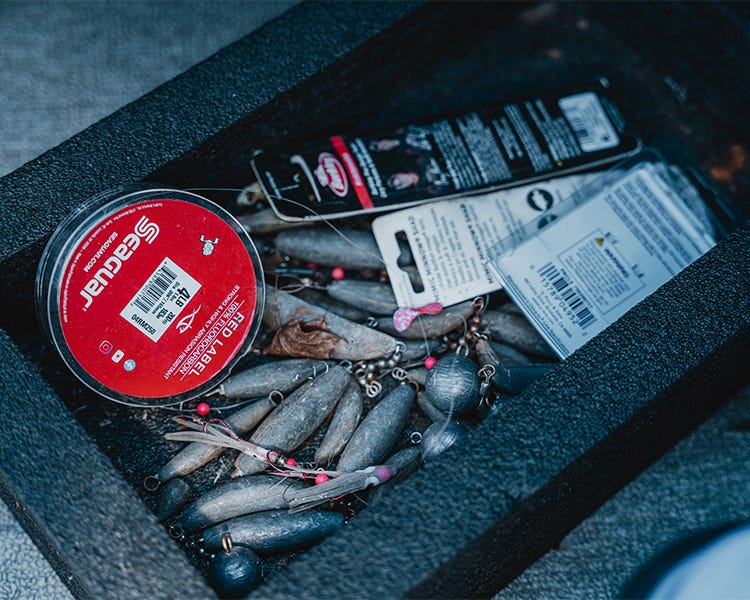
A simple and effective alternative is using a clip weight system. Start by letting out roughly 30–40 feet of line behind the boat before attaching a 3-ounce clip weight. Once the weight is attached, continue letting the line out until your line counter reads around 120 feet while maintaining a trolling speed close to 1.5 mph.
That combination will generally place your presentation somewhere in the 30-40 foot range, depending on lure drag, boat speed, and turns.
This works well because kokanee commonly suspend in the upper portion of the water column and will often move upward to strike a lure. Even if fish are marked slightly deeper on sonar, they frequently rise several feet to investigate a presentation moving above them.
Because of that behavior, many anglers focus less on getting directly in front of the fish and more on keeping their gear moving naturally through the upper feeding zone.
Trolling Speed
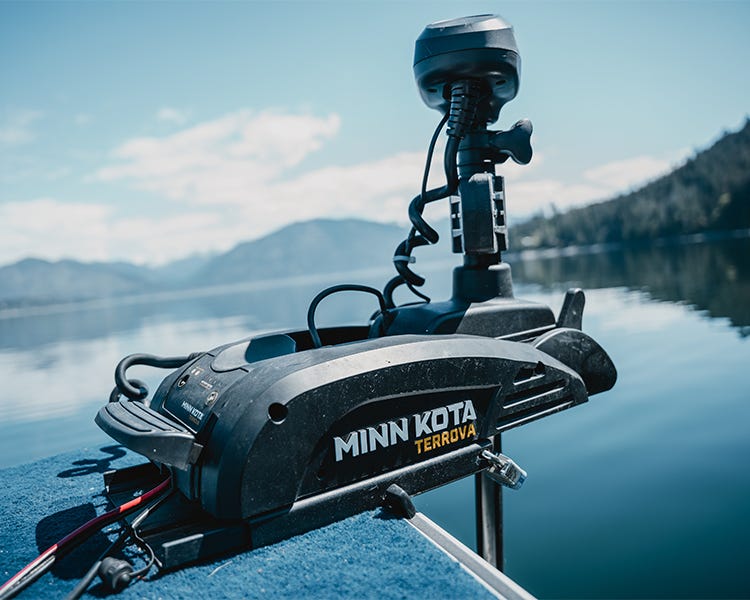
Trolling speed is one of the most important pieces of the kokanee puzzle, and it’s often where small adjustments make the biggest difference. As mentioned above, a good starting point is around 1.5 mph, which keeps the flasher working properly while still allowing the lure to track naturally behind it. From there, it becomes less about holding one exact number and more about constantly adjusting. Slight speed increases can tighten the action and trigger reaction bites, while slowing down can make the presentation more subtle when fish are being hesitant. Kokanee often follow a lure for a distance before committing, so changes in speed, along with gentle turns, can be what finally convinces them to strike.
Final Thoughts
At the end of the day, kokanee fishing comes down to understanding both the fish and the water they live in. Once you recognize that they’re constantly moving with temperature, light, and food, the approach becomes less about forcing bites and more about staying in the right zone with a natural presentation.
The simple steps listed above are often all it takes to stay effective. From there, small details like leader length, color choice, and subtle speed changes start to matter more than complicated gear.
Kokanee can feel unpredictable at times, but that’s also what makes them so rewarding to target. However, using the tips above, along with some trial and error, I guarantee you’ll be hooked up in no time!