How Montana-Made Drill Bits Are Made - and Why It Matters
Your drill bits are made in Montana
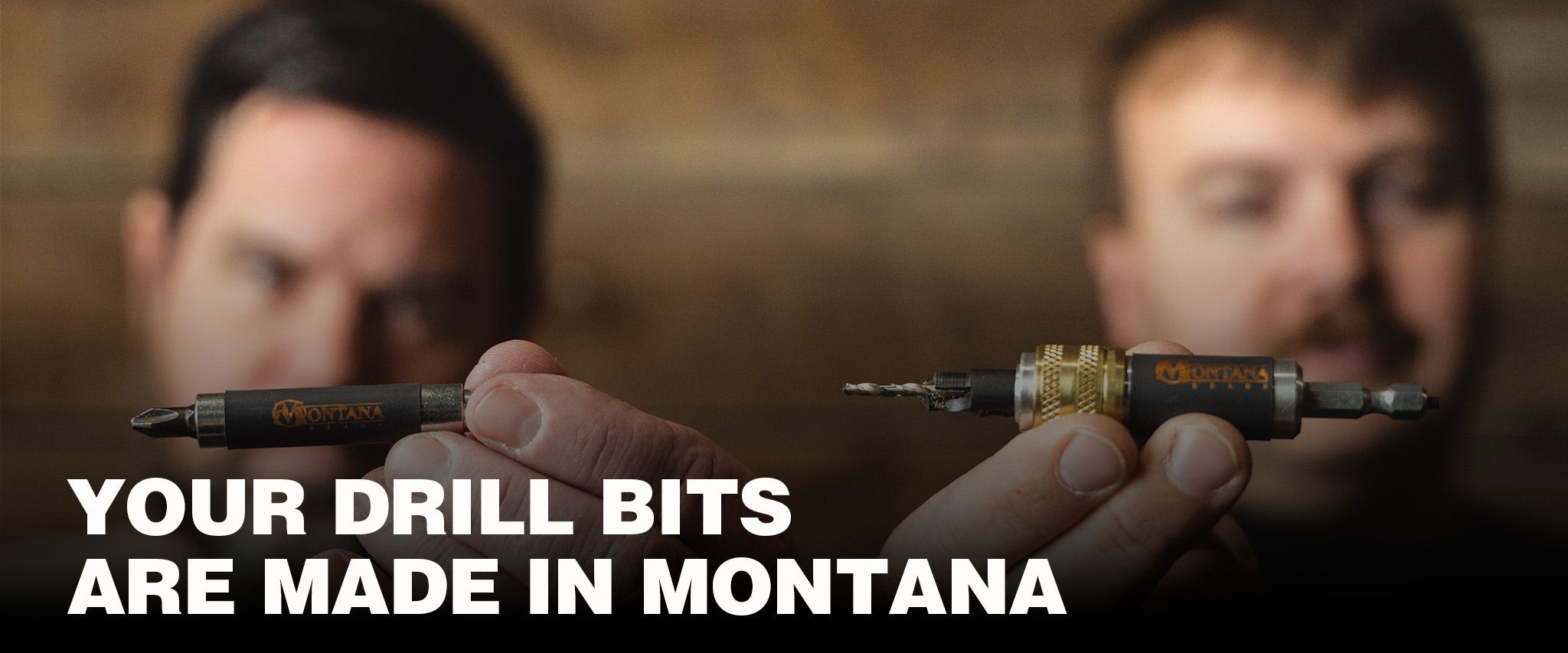
Your drill bits are made in Ronan, Montana
A behind the scenes tour of Rocky Mountain Twist (home of Montana Brand Tools) reveals a quality obsessed, patent driven team behind innovations like the magnetic screw guide, quick change connectors, hex shank bits, and vacuum brazed diamond drills - plus custom tooling for industries as tough as aerospace.
Inside Montana’s Tool Powerhouse: A Factory Tour of Rocky Mountain Twist - Home of Montana Brand Tools
If you’ve ever grabbed a drill or screw bit out of your tool box, chances are you’ve used innovations that trace back to a small town in western Montana. On our recent tour through Rocky Mountain Twist - the home of Montana Brand Tools in Ronan - we went start‑to‑finish across the manufacturing floor to see exactly how the bits, drivers, and other accessories that live in so many toolboxes are made.
A Montana Maker’s Story
Rocky Mountain Twist started as a family‑driven idea to create jobs in the local community - and it’s grown into a cornerstone employer with about 250 team members in a town of roughly 5,000. That community‑first DNA still shows on the production floor today.
Beyond the Montana Brand Tools line for consumers and pros, the company also produces advanced tooling under the Rocky Mountain Twist banner for demanding industries - including aerospace manufacturers such as Boeing and Lockheed Martin.
Quality at Every Turn
One of the things that stood out most on the tour was the sheer number of quality checks. From the moment raw material arrives, the quality team inspects it before it’s chopped (blanked), heat‑treated, ground, and finished - each step includes another inspection.
A neat detail: even bits that appear straight are engineered to be ever so slightly smaller at the tip than at the shank so they don’t bind in the hole. It’s one of those precision touches you don’t see - but you feel every time a bit cuts clean and pulls out smoothly.
That precision and attention to detail has put them on the map and in your toolbox in ways that you probably don’t realize.
Patents That Changed Your Toolbox
The Magnetic Screw Guide
That handy sleeve you slide down to keep a screw straight? Rocky Mountain Twist patented that idea here in Ronan. It’s magnetized to hold the fastener and keeps everything aligned so your screw goes in straight and true - no more wrestling with a wobbling fastener.
Quick‑Change, Quick Connect
You know the ubiquitous quick‑connect adapter that lets you flip bits in seconds? That technology was also patented here. The point is speed: swap between tasks without constantly swapping out bits.
Hex‑Shank Drill Bits
If you’ve ever had a smooth‑shank bit slip under load, you’ll appreciate this one. The team helped pioneer hex‑shank drill bits to lock into quick‑change connectors, which they also pioneered. This was a leap that went hand‑in‑hand with the rise of cordless tools in the ’90s. Developed with the inception of cordless drills that still needed chucks to tighten bit in drill shanks, Faster changes, better grip, fewer slips.
Innovation in the industry
Diamond‑Tipped Durability: Vacuum‑Brazed Bits
For tile, porcelain, and concrete, Montana Brand’s vacuum‑brazed diamond bits are workhorses. The diamonds are synthetic - engineered for consistency - and they’re bonded to the blank in a vacuum furnace so the braze adheres to both the steel and the diamond. After heating, the tool is rapidly cooled with nitrogen to “freeze” the bond. In the demo video on their YouTube channel, one diamond bit drilled well over 170 holes in tile before the team stopped counting.
Smarter Woodworking: Self‑Centering, Countersinking & Plug Cutting
Door hinges and hardware are a perfect use case for the self‑centering drill. Press the spring‑guided nose into the hardware opening and the bit centers itself for perfectly placed pilot holes. Flip the quick‑connect and you’re driving screws seconds later.
The countersink/counterbore combo offers even more control. With adjustable set screws (tightened using the integrated mini Allen key built right into the tool), you can set drill depth for the screw length you’re using, create a clean countersink so the head sits flush, or go deeper for a counterbore and hide the fastener completely with a plug - use a matching plug cutter to make tapered plugs from your project’s scrap wood for a seamless finish.
A Better Drywall Driver
If you’ve driven thousands of drywall screws like we have, you know the challenges: consistent depth, chewed‑up bits, and the more-than-occasional crooked screw. This drywall driver uses a magnetic free-spinning dimple sleeve that sink the screw just below the surface for easy mudding. When the bit wears, pop off the sleeve, swap the bit, and snap it back together. Need to back out a crooked screw? Remove the sleeve and use the same bit as a standard driver.
How Hex-Shank Bits Are Built: Zinc Die Casting in Action
One mesmerizing station on the line showed how hex shank ends are formed. The tip you see is actually two pieces: the steel drill section and a zinc end that’s molded directly onto it. Robots load parts into a die, molten zinc (over 900°F) is injected under pressure, the die cools for a moment, and out comes the finished piece with a clean separation line where steel meets zinc. Fast cooling helps preserve strength and dimensional accuracy.
Custom Tooling for Tough Jobs
Beyond off‑the‑shelf lines, the team partners with manufacturers to design custom bits - like a trailer maker that needed to drill through multiple materials in a single pass. The result: tailored geometry and materials for specific stacks of material, whether you’re building airplanes or utility trailers.
Why It Matters
From family‑roots manufacturing to aerospace‑grade precision, Rocky Mountain Twist shows what happens when craftsmanship meets process discipline. The company’s patents - screw guides, quick‑connects, hex‑shank bits - have quietly shaped how the rest of us work, saving time and improving results on jobs big and small. And they’re doing it all in Ronan, Montana.
FAQs
What is vacuum brazing on diamond bits?
It’s a process that bonds synthetic diamond grit to a steel blank in a vacuum furnace so the braze adheres to both surfaces; afterward, nitrogen rapidly cools the assembly to lock the bond in place.
Are the diamonds real?
They’re synthetic diamonds - engineered for consistent cutting performance on materials like tile, porcelain, and concrete.
What’s the difference between a countersink and a counterbore?
A countersink creates a conical recess so a screw head sits flush. A counterbore is deeper and cylindrical so you can hide the screw head beneath the surface - often finished with a wood plug cut by a plug cutter.
Why choose hex‑shank drill bits?
Hex‑shanks lock into quick‑change connectors and resist slipping under load, speeding up bit changes and protecting your wrists compared with smooth‑shank bits.
What's special about the drywall driver with sleeve?
The sleeve spins freely while the bit turns, helping set screws to the right depth while protecting your fingers; the bit is magnetic and easily replaceable.

Tucker brings more than 15 years of hands-on experience in construction and remodeling to the North 40 blog. His background includes interior and exterior carpentry, plumbing, electrical work, drywall, and a wide range of repair and building projects. Years of solving real-world problems on the job have given him a practical perspective on the tools, techniques, and materials that help get work done right.
A dedicated tool user and industry enthusiast, Tucker enjoys following the latest innovations from manufacturers and exploring how new designs can improve efficiency, performance, and results. Whether tackling repairs, building something new, or testing the latest equipment, he’s always looking for smarter ways to work. Tucker has called Montana home since 2014 and has been part of the North 40 Outfitters team since 2025.